CAS 80242-24-6
:4-cyano-1H-pyrrole-2-carboxylic acid
Description:
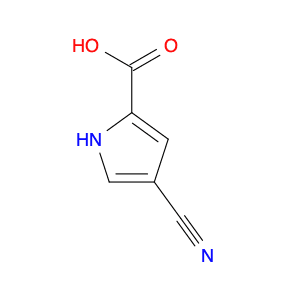
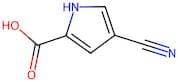
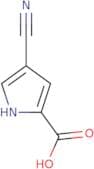
4-Cyano-1H-pyrrole-2-carboxylic acid is an organic compound characterized by its pyrrole ring structure, which is a five-membered aromatic heterocycle containing nitrogen. This compound features a cyano group (-CN) and a carboxylic acid group (-COOH) attached to the pyrrole ring, contributing to its reactivity and potential applications in various chemical syntheses. The presence of the cyano group enhances its utility in organic synthesis, particularly in the formation of other nitrogen-containing compounds. The carboxylic acid functionality provides acidic properties, allowing for potential interactions in biochemical processes or as a precursor in the synthesis of pharmaceuticals. This compound is typically a solid at room temperature and may exhibit solubility in polar solvents due to the presence of the carboxylic acid group. Its unique structure and functional groups make it of interest in fields such as medicinal chemistry and materials science, where it may serve as a building block for more complex molecules. Safety and handling precautions should be observed, as with many organic compounds, to mitigate any potential hazards.
Formula:C6H4N2O2
InChI:InChI=1/C6H4N2O2/c7-2-4-1-5(6(9)10)8-3-4/h1,3,8H,(H,9,10)
SMILES:c1c(C#N)c[nH]c1C(=O)O
Synonyms:- 80242-24-6
Sort by
Purity (%)
0
100
|
0
|
50
|
90
|
95
|
100
Found 4 products.
4-Cyano-1H-pyrrole-2-carboxylic acid
CAS:Formula:C6H4N2O2Purity:95%Color and Shape:SolidMolecular weight:136.10824-Cyano-1H-pyrrole-2-carboxylic acid
CAS:4-Cyano-1H-pyrrole-2-carboxylic acidPurity:97%Color and Shape:SolidMolecular weight:136.11g/mol4-Cyano-1H-pyrrole-2-carboxylic acid
CAS:4-Cyano-1H-pyrrole-2-carboxylic acid is a small molecule that has been shown to have potent anti-cancer activity in animal models. It can induce the proliferation of human epidermal progenitor cells and the growth of tumor cells in culture. Animal studies have demonstrated that 4-cyano-1H-pyrrole-2-carboxylic acid enhances the infiltration of microglia and csf-1 receptor expression in brain tumors, leading to an increase in microglial activation. This agent also interacts with cancer cell factor receptor, enhancing its function and leading to increased infiltration of tumor cells by microglia.Formula:C6H4N2O2Purity:Min. 95%Molecular weight:136.11 g/mol