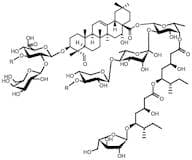
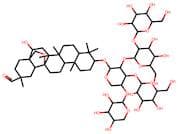
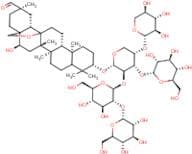
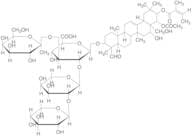
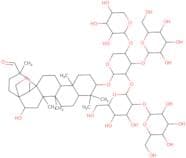
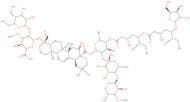
CAS 8047-15-2
:Saponins
- 5PD-Lytic
- Glycosides, sapogenin
- Hd 1907
- Sapogenins, glycosides
- Saponin Andean QDP Ultra Organic
- Saponin from Quillaja Bark
- Saponine
- Saponins
- Saponosides
- Saponin
Saponin
CAS:This Thermo Scientific Chemicals brand product was originally part of the Alfa Aesar product portfolio. Some documentation and label information may refer to the legacy brand. The original Alfa Aesar product / item code or SKU reference has not changed as a part of the brand transition to Thermo Sci
Color and Shape:Powder, White to pale yellow or pale creamSaponin, from Quillaja bark
CAS:Saponin, from Quillaja barkColor and Shape:Tan PowderMolecular weight:1,223.35g/molSaponins
CAS:Saponins (Sapogenins Glycosides) are compounds in the glycoside family found in a wide variety of plants that protect them from microbial and fungal damage.Formula:C55H86O24Purity:95% - 98.22%Color and Shape:Brownish Turbid Liquid LiquidMolecular weight:1131.269Saponin (Technical Grade)
CAS:Controlled ProductApplications Saponin is an amphipathic glycoside and surfactant.
Formula:C62H96O27Color and Shape:Beige To YellowMolecular weight:1273.42Saponin - from quillaja plant - 25%-30% sapogenin content
CAS:Saponin from the quillaja plant is a natural extract characterized by a significant sapogenin content of 25%-30%. This product is derived from the bark of the Quillaja saponaria tree, a native species of Chile. The primary mode of action of these saponins involves the interaction with cell membranes due to their surfactant properties, which can lead to membrane permeabilization and subsequent cellular responses.Purity:Min. 95%Color and Shape:PowderSaponin ex. Quillaja for molecular biology, 9% Sapogenin
CAS:Color and Shape:Pale yellow to yellow to beige to brown, Powder, Clear to slightly hazySaponin ex. Gypsophila Roots for molecular biology, 25% Sapogenin
CAS:Color and Shape:Pale yellow to Yellow to Beige to Brown, PowderSaponins
CAS:Saponins are naturally occurring glycosides, which are compounds sourced primarily from various plant species, including legumes, herbs, and certain vegetables. These compounds are characterized by their unique structure, comprising a hydrophobic aglycone linked to hydrophilic sugar moieties. This dual nature endows saponins with surfactant-like properties, allowing them to interact with both hydrophilic and hydrophobic molecules.
Purity:(Uv) Min. 90%Color and Shape:Brown Off-White PowderRef: 3D-OS29326
Discontinued product