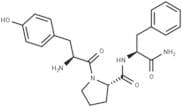
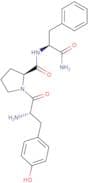
CAS 80705-23-3
:BETA-CASOMORPHIN (1-3) AMIDE
Description:
Beta-casomorphin (1-3) amide is a peptide derived from the digestion of casein, a major protein found in milk. It is classified as an opioid peptide due to its ability to bind to opioid receptors in the body, which can influence pain perception, mood, and various physiological processes. This peptide consists of a short chain of amino acids, specifically three residues, and is known for its potential biological activities, including modulation of gastrointestinal function and effects on the central nervous system. Beta-casomorphin (1-3) amide is of interest in research related to nutrition, neurobiology, and the potential implications of dairy consumption on health. Its structure and function can vary slightly depending on the source of casein and the conditions under which it is produced. As with many bioactive peptides, further studies are needed to fully understand its mechanisms of action and potential therapeutic applications.
Formula:C23H28N4O4
Synonyms:- BETA-CASOMORPHIN (1-3) AMIDE
- Beta-Casomorphin (1-3) amide acetate salt
- TYR-PRO-PHE-NH2
- L-Tyrosyl-L-prolyl-L-phenylalaninamide
- β-Casomorphin (1-3) amide
- H-TYR-PRO-PHE-NH2
- b-Casomorphin (1-3), amide
- L-Phenylalaninamide, L-tyrosyl-L-prolyl-
Sort by
Purity (%)
0
100
|
0
|
50
|
90
|
95
|
100
Found 2 products.
β-Casomorphin (1-3), amide
CAS:β-Casomorphin (1-3), amide is a peptide fragment of β-Casomorphin with 3 amino acid.Formula:C23H28N4O4Purity:98%Color and Shape:SolidMolecular weight:424.49Beta-Casomorphin (1-3) amide acetate salt
CAS:Beta-casomorphin (1-3) amide acetate salt (BCMA) is a peptide that belongs to the class of opioid compounds. It is an amino acid and has been shown to be a potent agonist at opioid receptors. BCMA is used in vivo as a tritiated ligand for mapping the distribution of opioid receptors in rat brain. The affinity of BCMA for opioid receptors increases with dose, and its antinociceptive effects are dose-dependent. Beta-casomorphin (1-3) amide acetate salt has also been shown to have affinity for enkephalins, which are naturally occurring peptides that bind to opioid receptors.Formula:C23H28N4O4Purity:Min. 95%Molecular weight:424.49 g/mol