


CAS 808755-67-1
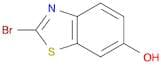
:2-bromo-1,3-benzothiazol-6-ol
Description:
2-Bromo-1,3-benzothiazol-6-ol is a chemical compound characterized by its unique structure, which includes a bromine atom and a hydroxyl group attached to a benzothiazole ring system. This compound typically exhibits properties such as moderate solubility in organic solvents and limited solubility in water, which is common for many benzothiazole derivatives. The presence of the bromine substituent can influence its reactivity, making it a potential candidate for various chemical reactions, including nucleophilic substitutions. The hydroxyl group contributes to its potential as a phenolic compound, which may exhibit antioxidant properties. Additionally, benzothiazole derivatives are known for their biological activities, including antimicrobial and antifungal properties, making 2-bromo-1,3-benzothiazol-6-ol of interest in pharmaceutical research. Its applications may extend to materials science and organic synthesis, where it can serve as an intermediate or a building block for more complex molecules. Overall, this compound's unique structural features and functional groups make it a subject of interest in both academic and industrial chemistry.
Formula:C7H4BrNOS
InChI:InChI=1/C7H4BrNOS/c8-7-9-5-2-1-4(10)3-6(5)11-7/h1-3,10H
SMILES:c1cc2c(cc1O)sc(Br)n2
Synonyms:- 6-Benzothiazolol, 2-Bromo-
- 2-Bromo-1,3-benzothiazol-6-ol
Sort by
Purity (%)
0
100
|
0
|
50
|
90
|
95
|
100
Found 4 products.
2-Bromobenzothiazol-6-ol
CAS:Formula:C7H4BrNOSPurity:97%Color and Shape:SolidMolecular weight:230.08182-Bromobenzo[d]thiazol-6-ol
CAS:2-Bromobenzo[d]thiazol-6-ol is a diagnostic agent that is used in positron emission tomography (PET) scans to detect Alzheimer's disease. 2-Bromobenzo[d]thiazol-6-ol binds to amyloid plaques and deposits of beta amyloid peptide, the hallmark of Alzheimer's disease. It can be synthesized by cross coupling nitro compounds with aminoacids or by alkylation of nitro compounds with alkenes. Other methods for its synthesis include the microwave irradiation of bromobenzene and thiourea in a nitric acid medium. This compound undergoes metabolism via cytochrome P450 enzymes to form benzo[d]thiazole-2,6(3H)-diol, which is then oxidized by NADPH to form benzo[e]thiazole-2,6(3H)-quinone.Formula:C7H4BrNOSPurity:Min. 95%Molecular weight:230.08 g/mol

![2-Bromobenzo[d]thiazol-6-ol](/_next/image/?url=https%3A%2Fstatic.cymitquimica.com%2Fproducts%2F54%2Fthumb%2FOR81963.jpg&w=3840&q=75)


![2-Bromobenzo[d]thiazol-6-ol](/_next/image/?url=https%3A%2Fstatic.cymitquimica.com%2Fproducts%2F3D%2Fthumb%2FFB144121.jpg&w=3840&q=75)
