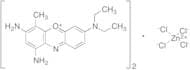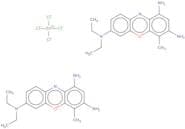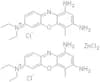
CAS 81029-05-2
:Brilliant cresyl blue
Description:
Brilliant cresyl blue is a synthetic dye belonging to the class of triphenylmethane dyes, characterized by its vibrant blue color. It is primarily used as a biological stain in histology and cytology, particularly for the identification of viable and non-viable cells. The dye operates by selectively staining cellular components, allowing for the visualization of cell morphology and viability under a microscope. Brilliant cresyl blue is soluble in water and exhibits a pH-dependent color change, which can be useful in various analytical applications. Its chemical structure includes multiple aromatic rings, contributing to its stability and color properties. Additionally, it has applications in biochemical assays, particularly in the assessment of cell proliferation and cytotoxicity. While it is generally considered safe for laboratory use, appropriate safety measures should be taken to handle the dye, as with any chemical reagent. Overall, Brilliant cresyl blue serves as a valuable tool in both research and clinical settings for studying cellular characteristics.
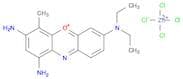
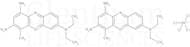
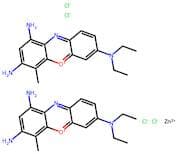
Formula:C34H42Cl4N8O2Zn
InChI:InChI=1/C17H20N4O/c1-4-21(5-2)11-6-7-14-15(8-11)22-17-10(3)12(18)9-13(19)16(17)20-14/h6-9H,4-5H2,1-3H3,(H3,18,19)/p+1
InChI key:InChIKey=MJQMEHNJPRMZLG-UHFFFAOYSA-J
SMILES:NC=1C2=C([O+]=C3C(=N2)C=CC(N(CC)CC)=C3)C(C)=C(N)C1.[Zn+2]([Cl-])([Cl-])([Cl-])[Cl-]
Synonyms:- 1,3-Diamino-7-(diethylamino)-4-methyl-phenoxazin-5-ium (T-4)-tetrachlorozincate(2-) (2:1)
- 1,3-Diamino-7-(diethylamino)-4-methylphenoxazin-5-ium tetrachlorozincate (2:1)
- N-(7,9-diamino-6-methyl-3H-phenoxazin-3-ylidene)-N-ethylethanaminium
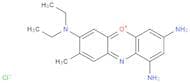
- N-(7,9-diamino-6-methyl-5a,9a-dihydro-3H-phenoxazin-3-ylidene)-N-ethylethanaminium chloride
- Phenoxazin-5-ium, 1,3-diamino-7-(diethylamino)-4-methyl-, (T-4)-tetrachlorozincate(2-) (2:1)
- Zincate(2-), tetrachloro-, (T-4)-, bis[1,3-diamino-7-(diethylamino)-4-methylphenoxazin-5-ium]
- Brilliant Cresyl Blue
- BRILLIANT CRESYL BLUE ALD, INDICATOR GRA DE
- Brilliant crysyl blue ALD
- Brilliant Blue C
- brillant
- FORMERLY LISTED AS BRILLIANT CRESYL BLUE
- Brilliant BlueC, Brilliant Cresyl blue
- BRILLIANT BLUE C
- CI 51010
- Brilliant Cresyl blu
- BRILLIANT CRESYL BLUE ZINC CHLORIDE DOUBLE SALT
- BRILLIANT CRESYL BLUE C.I.No 51010
- BRILLIANT CRESYL BLUE ALD, CERTIFIED
- 5-[(dimethylphenyl)azo]-6-hydroxy-2-naphthalenesulfonicacimonosodiumsalt
- Brilliant cresyl Blue, high purity biological stain, pure
- (7,9-Diamino-6-methyl-5a,9a-dihydrophenoxazin-3-ylidene)-diethyl-azanium chloride
- BRILLIANT CRESYL BLUE ALD
- Brilliant Crystal Blue
- Brilliant Cresyl Blue ALD
- 3-AMino-9-diethylaMino-10-Methyl diphenazoxoniuM chloride
- Brilliant Cresyl Blue Certified
- BRILLLIANT BLUE C
- Brilliant cresyl bulue
- Brilliant cresyl Blue,pure,high purity biological stain
- brillantcresylblueadl
- Cresyl blue BBS or 2RN
- BRILLIANT CRESYL BLUE ALD INDICATOR GR&
- Brilliant cresy blue
- See more synonyms
Sort by
Purity (%)
0
100
|
0
|
50
|
90
|
95
|
100
Found 7 products.
Brilliant Cresyl Blue certified
CAS:Formula:C34H42Cl4N8O2ZnPurity:65%Color and Shape:SolidMolecular weight:801.9417Brilliant Cresyl Blue (C.I. 51010)
CAS:Formula:C17H20N3OClZnCl2Purity:≥ 65.0% (spectrophotometry)Color and Shape:Green to dark green powderMolecular weight:385.96Brilliant Cresyl Blue
CAS:Formula:C17H20N3OClZnCl2Color and Shape:Green, Powder, Clear, BlueMolecular weight:385.96Brilliant Cresyl blue (Technical Grade)
CAS:Controlled ProductApplications Brilliant Cresyl blue is a useful electroactive indicator dye.Dyes and metabolites.
Formula:C17H21N4O·Cl4ZnColor and Shape:NeatMolecular weight:801.97068Brilliant cresyl blue
CAS:Brilliant cresyl blue is a reactive dye that is used as a model system for mitochondrial membrane potential. It is injected into the oocyte and polymerase chain reaction (PCR) is performed to detect mitochondrial functions. The dye can be detected with optical sensors, which are sensitive to UV light. When the dye migrates from the mitochondria to the cytoplasm, it can be detected by UV-sensitive sensors. This process can help scientists determine if there are any defects in mitochondrial membrane potential.
Formula:(C17H21N4O)2•ZnCl4Color and Shape:Green PowderMolecular weight:400.97 g/mol