CAS 81036-81-9
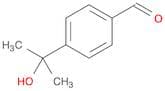
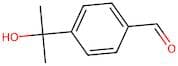
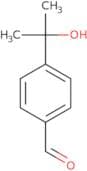
:4-(2-hydroxypropan-2-yl)benzaldehyde
Description:
4-(2-Hydroxypropan-2-yl)benzaldehyde, also known as p-hydroxyisobutylbenzaldehyde, is an organic compound characterized by its aromatic aldehyde structure. It features a benzene ring substituted with a hydroxyl group and an isobutyl side chain, which contributes to its unique properties. This compound typically appears as a colorless to pale yellow liquid with a distinctive aromatic odor. It is soluble in organic solvents such as ethanol and ether but has limited solubility in water due to its hydrophobic benzene ring. The presence of the hydroxyl group imparts some polar characteristics, influencing its reactivity and potential applications. 4-(2-Hydroxypropan-2-yl)benzaldehyde can participate in various chemical reactions, including oxidation and condensation, making it useful in organic synthesis and as an intermediate in the production of pharmaceuticals and fragrances. Safety data indicates that, like many aldehydes, it should be handled with care due to potential irritant effects on the skin and respiratory system.
Formula:C10H12O2
Synonyms:- Benzaldehyde, 4-(1-hydroxy-1-methylethyl)-
- 4-(2-hydroxypropan-2-yl)benzaldehyde
Sort by
Purity (%)
0
100
|
0
|
50
|
90
|
95
|
100
Found 4 products.
4-(2-Hydroxypropan-2-yl)benzaldehyde
CAS:Formula:C10H12O2Purity:98%Color and Shape:LiquidMolecular weight:164.20114-(2-Hydroxypropan-2-yl)benzaldehyde
CAS:4-(2-Hydroxypropan-2-yl)benzaldehydePurity:95%Molecular weight:164.2g/mol4-(2-Hydroxypropan-2-yl)benzaldehyde
CAS:4-(2-Hydroxypropan-2-yl)benzaldehyde is a chemical compound that has been shown to be effective in cancer treatments. It is a potent inhibitor of the retinoic acid receptor and is used as an adjuvant therapy with chemotherapy. 4-(2-Hydroxypropan-2-yl)benzaldehyde has been shown to have the ability to inhibit tumor growth, induce apoptosis and inhibit cancer stem cells. The optimum concentration for this drug is not yet known, but it has been shown to have an inhibitory effect on chemotherapy resistance in some model systems.Formula:C10H12O2Purity:Min. 95%Molecular weight:164.2 g/mol