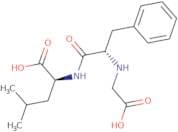
CAS 81109-85-5
:N-carboxymethyl-phe-leu
Description:
N-carboxymethyl-phe-leu, also known by its CAS number 81109-85-5, is a synthetic compound that belongs to the class of amino acid derivatives. This substance is characterized by the presence of a carboxymethyl group attached to the phenylalanine (phe) and leucine (leu) amino acids, which contributes to its unique properties. It is typically utilized in biochemical and pharmaceutical research, particularly in studies related to peptide synthesis and drug development. The compound may exhibit specific biological activities, including potential roles in modulating protein interactions or influencing metabolic pathways. Its solubility, stability, and reactivity can vary depending on the pH and the presence of other ions or molecules in the solution. As with many amino acid derivatives, N-carboxymethyl-phe-leu may also be of interest in the development of novel therapeutic agents or as a tool in molecular biology applications. Proper handling and storage conditions are essential to maintain its integrity and effectiveness in research settings.
Formula:C17H24N2O5
Synonyms:- Carboxymethyl-Phe-Leu-OH
- L-Leucine, N-(carboxymethyl)-L-phenylalanyl-
- CARBOXYMETHYL-PHE-LEU
- N-(Carboxymethyl)-L-phenylalanyl-L-leucine
- N-CARBOXYMETHYL-PHE-LEU-OH
- N-carboxymethyl-phenylalanine-leucine
- N-CARBOXYMETHYL-PHE-LEU
Sort by
Purity (%)
0
100
|
0
|
50
|
90
|
95
|
100
Found 1 products.
Carboxymethyl-Phe-Leu-OH
CAS:Carboxymethyl-Phe-Leu-OH (CMPLE) is a metalloprotease inhibitor that inhibits the activity of proteases, such as serine proteases and cysteine proteases. CMPLE is used to treat infectious diseases caused by bacteria, fungi, or parasites. CMPLE also has been shown to inhibit the formation of inflammatory responses in autoimmune and inflammatory diseases. This drug can be used in combination with benzalkonium chloride or monoclonal antibodies to treat hematopoietic cells. The optimum pH for this drug is 7.5, and it denatures at high temperatures. It also binds to epithelial surface glycoproteins in the gastrointestinal tract and may be useful for treating ulcers caused by Helicobacter pylori infection.
Formula:C17H24N2O5Purity:Min. 95%Molecular weight:336.38 g/mol