CAS 81278-86-6
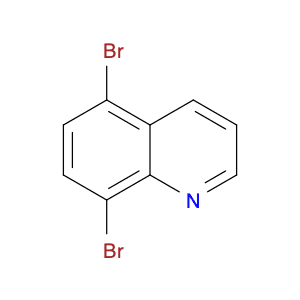
:Quinoline, 5,8-dibromo-
Description:
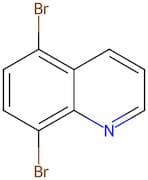
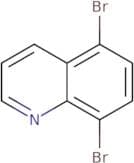
Quinoline, 5,8-dibromo- is a brominated derivative of quinoline, a bicyclic compound composed of a benzene ring fused to a pyridine ring. This specific compound features bromine substituents at the 5 and 8 positions of the quinoline structure, which can significantly influence its chemical properties and reactivity. Typically, brominated quinolines exhibit enhanced lipophilicity and can participate in various chemical reactions, including electrophilic substitutions and nucleophilic attacks. The presence of bromine atoms can also affect the compound's biological activity, making it of interest in medicinal chemistry and material science. Quinoline derivatives are known for their applications in pharmaceuticals, agrochemicals, and as intermediates in organic synthesis. The compound's physical properties, such as melting point, boiling point, and solubility, can vary based on the bromination pattern and the presence of other functional groups. Safety data should be consulted for handling and usage, as brominated compounds can pose environmental and health risks.
Formula:C9H5Br2N
Synonyms:- 5,8-Dibromoquinoline
Sort by
Purity (%)
0
100
|
0
|
50
|
90
|
95
|
100
Found 4 products.
5,8-Dibromoquinoline
CAS:Formula:C9H5Br2NPurity:98%Color and Shape:Liquid, No data available.Molecular weight:286.9545,8-Dibromoquinoline
CAS:5,8-Dibromoquinoline is a synthetic trisubstituted quinoline derivative that has been shown to form frameworks with nitrogen atoms. It has been synthesized from 2-hydroxyphenylacetic acid, which upon dehydration gives the corresponding n-oxide. 5,8-Dibromoquinoline forms an acidic solution in water and an alkaline solution in ethanol. 5,8-Dibromoquinoline can be hydrolysed by both acidic and alkaline conditions to produce 2,4-dichlorobenzene and 2-bromophenol. The reaction is stereoselective with the formation of only one product.
Formula:C9H5Br2NPurity:Min. 95%Molecular weight:286.95 g/mol