CAS 815-52-1
:2-Bromo-3-pentanone
Description:
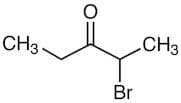
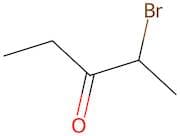
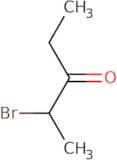
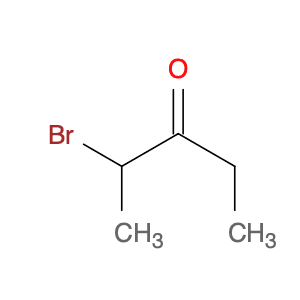
2-Bromo-3-pentanone is an organic compound classified as a ketone, characterized by the presence of a bromine atom and a carbonyl group (C=O) within its structure. Its molecular formula is C5H9BrO, indicating it contains five carbon atoms, nine hydrogen atoms, one bromine atom, and one oxygen atom. This compound typically appears as a colorless to pale yellow liquid with a distinctive odor. It is soluble in organic solvents such as ethanol and ether but has limited solubility in water due to its hydrophobic carbon chain. 2-Bromo-3-pentanone is often used in organic synthesis as an intermediate for the preparation of various pharmaceuticals and agrochemicals. It exhibits reactivity typical of ketones, including nucleophilic addition reactions, and can undergo substitution reactions due to the presence of the bromine atom. Safety precautions should be taken when handling this compound, as it may pose health risks if inhaled or ingested, and appropriate protective equipment should be used.
Formula:C5H9BrO
InChI:InChI=1S/C5H9BrO/c1-3-5(7)4(2)6/h4H,3H2,1-2H3
InChI key:InChIKey=VUDTYIUNUSPULX-UHFFFAOYSA-N
SMILES:C(C(Br)C)(CC)=O
Synonyms:- 2-Bromo-3-pentanone
- 2-Bromopent-3-one
- Ethyl a-bromoethyl ketone
- a-Bromodiethyl ketone
- 3-Pentanone, 2-bromo-
- 2-Bromo-3-pentanone >
Sort by
Purity (%)
0
100
|
0
|
50
|
90
|
95
|
100
Found 4 products.
2-Bromo-3-pentanone
CAS:Formula:C5H9BrOPurity:>95.0%(GC)Color and Shape:Light orange to Yellow to Green clear liquidMolecular weight:165.032-Bromo-3-pentanone
CAS:2-Bromo-3-pentanone is a chemical reagent that is used in the synthesis of β-unsaturated ketones. It is produced by the alkylation of sodium hydroxide solution with 2-bromopentane, followed by the reaction with a ruthenium complex. The product can also be obtained from β-unsaturated ketones by reducing anhydrous sodium and sodium carbonate in a hydroxide solution. This process converts the carbonyl group to an alkene group. Cyclopentenones are obtained by dehydrogenation of ethyl esters, which can be achieved through reductive or stereoselective methods. Halides can be added as substituents to produce stereoisomers in stepwise reactions.Formula:C5H9BrOPurity:Min. 95%Molecular weight:165.03 g/mol