CAS 81552-34-3
:Concanamycin C
Description:
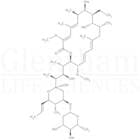
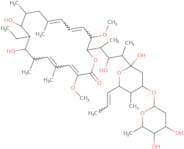
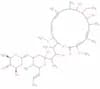
Concanamycin C is a natural product belonging to the class of macrolide antibiotics, specifically derived from the fermentation of the bacterium *Streptomyces griseus*. It is known for its potent inhibitory effects on the vacuolar ATPase (V-ATPase), an enzyme critical for various cellular processes, including pH regulation and nutrient transport. This inhibition leads to significant biological effects, making concanamycin C a valuable compound in research, particularly in studies related to cellular metabolism and apoptosis. The substance exhibits a complex molecular structure characterized by multiple rings and functional groups, contributing to its biological activity. Concanamycin C is typically used in laboratory settings to explore mechanisms of cell death and to investigate potential therapeutic applications in cancer and other diseases. Its stability and solubility in organic solvents make it suitable for various experimental conditions. However, as with many bioactive compounds, careful handling and consideration of safety protocols are essential due to its potent biological effects.
Formula:C45H74O13
InChI:InChI=1/C45H74O13/c1-13-16-34-28(7)37(56-38-22-33(46)42(50)31(10)55-38)23-45(52,58-34)30(9)41(49)29(8)43-35(53-11)18-15-17-24(3)19-26(5)39(47)32(14-2)40(48)27(6)20-25(4)21-36(54-12)44(51)57-43/h13,15-18,20-21,26-35,37-43,46-50,52H,14,19,22-23H2,1-12H3/b16-13+,18-15-,24-17-,25-20-,36-21+/t26?,27?,28?,29?,30?,31-,32?,33-,34?,35?,37?,38-,39?,40?,41?,42-,43?,45?/m1/s1
InChI key:InChIKey=XKYYLWWOGLVPOR-GKJVGUBMSA-N
SMILES:[C@@H]([C@@H]([C@H](C)[C@@]1([C@@H](OC)/C=C/C=C(\C)/C[C@@H](C)[C@H](O)[C@H](CC)[C@H](O)[C@H](C)/C=C(\C)/C=C(\OC)/C(=O)O1)[H])O)(C)[C@@]2(O)C[C@@H](O[C@H]3C[C@@H](O)[C@H](O)[C@@H](C)O3)[C@H](C)[C@@H](/C=C/C)O2
Synonyms:- (3Z,5E,7R,8R,9S,10S,11R,13E,15E,17S,18R)-18-[(1S,2R,3S)-3-[(2R,4R,5S,6R)-4-[(2,6-Dideoxy-β-<span class="text-smallcaps">D</span>-arabino-hexopyranosyl)oxy]tetrahydro-2-hydroxy-5-methyl-6-(1E)-1-propen-1-yl-2H-pyran-2-yl]-2-hydroxy-1-methylbutyl]-9-ethyl-8,10-dihydroxy-3,17-dimethoxy-5,7,11,13-tetramethyloxacyclooctadeca-3,5,13,15-tetraen-2-one
- 2,4-dideoxy-3-O-(2,6-dideoxy-α-D-arabino-hexopyranosyl)-1-C-{3-[(16E)-11-ethyl-10,12-dihydroxy-3,17-dimethoxy-7,9,13,15-tetramethyl-18-oxooxacyclooctadeca-4,6,14,16-tetraen-2-yl]-2-hydroxy-1-methylbutyl}-4-methyl-5-[(1E)-prop-1-en-1-yl]pentopyranose
- 4'-O-De(aminocarbonyl)concanamycin A
- Concanamycin A, 4'-O-de(aminocarbonyl)-
- Concanamycin C
- Oxacyclooctadeca-3,5,13,15-tetraen-2-one, 18-[(1S,2R,3S)-3-[(2R,4R,5S,6R)-4-[(2,6-dideoxy-β-<span class="text-smallcaps">D</span>-arabino-hexopyranosyl)oxy]tetrahydro-2-hydroxy-5-methyl-6-(1E)-1-propen-1-yl-2H-pyran-2-yl]-2-hydroxy-1-methylbutyl]-9-ethyl-8,10-dihydroxy-3,17-dimethoxy-5,7,11,13-tetramethyl-, (3Z,5E,7R,8R,9S,10S,11R,13E,15E,17S,18R)-
- Oxacyclooctadeca-3,5,13,15-tetraen-2-one, 18-[(1S,2R,3S)-3-[(2R,4R,5S,6R)-4-[(2,6-dideoxy-β-<span class="text-smallcaps">D</span>-arabino-hexopyranosyl)oxy]tetrahydro-2-hydroxy-5-methyl-6-(1E)-1-propenyl-2H-pyran-2-yl]-2-hydroxy-1-methylbutyl]-9-ethyl-8,10-dihydroxy-3,17-dimethoxy-5,7,11,13-tetramethyl-, (3Z,5E,7R,8R,9S,10S,11R,13E,15E,17S,18R)-
- Oxacyclooctadecane, concanamycin A deriv.
- (3Z,5E,7R,8R,9S,10S,11R,13E,15E,17S,18R)-18-[(1S,2R,3S)-3-[(2R,4R,5S,6R)-4-[(2,6-Dideoxy-β-D-arabino-hexopyranosyl)oxy]tetrahydro-2-hydroxy-5-methyl-6-(1E)-1-propen-1-yl-2H-pyran-2-yl]-2-hydroxy-1-methylbutyl]-9-ethyl-8,10-dihydroxy-3,17-dimethoxy-5,7,11,13-tetramethyloxacyclooctadeca-3,5,13,15-tetraen-2-one
- Oxacyclooctadeca-3,5,13,15-tetraen-2-one, 18-[(1S,2R,3S)-3-[(2R,4R,5S,6R)-4-[(2,6-dideoxy-β-D-arabino-hexopyranosyl)oxy]tetrahydro-2-hydroxy-5-methyl-6-(1E)-1-propen-1-yl-2H-pyran-2-yl]-2-hydroxy-1-methylbutyl]-9-ethyl-8,10-dihydroxy-3,17-dimethoxy-5,7,11,13-tetramethyl-, (3Z,5E,7R,8R,9S,10S,11R,13E,15E,17S,18R)-
- Oxacyclooctadeca-3,5,13,15-tetraen-2-one, 18-[(1S,2R,3S)-3-[(2R,4R,5S,6R)-4-[(2,6-dideoxy-β-D-arabino-hexopyranosyl)oxy]tetrahydro-2-hydroxy-5-methyl-6-(1E)-1-propenyl-2H-pyran-2-yl]-2-hydroxy-1-methylbutyl]-9-ethyl-8,10-dihydroxy-3,17-dimethoxy-5,7,11,13-tetramethyl-, (3Z,5E,7R,8R,9S,10S,11R,13E,15E,17S,18R)-
Sort by
Purity (%)
0
100
|
0
|
50
|
90
|
95
|
100
Found 3 products.
Concanamycin C
CAS:Concanamycin C, a natural macrolide antibiotic, was initially isolated from Streptomyces and identified as an inhibitor of T-cell proliferation in response to concanavalin A (1,2). It exhibits cytotoxicity to fungi, including yeasts, by inhibiting vacuolar-type ATPases (3,4).Formula:C45H74O13Color and Shape:SolidMolecular weight:823.1Concanamycin C
CAS:Concanamycin C is an analog of the human kinase inhibitor that has been shown to have potent anticancer activity. This compound induces apoptosis in cancer cells by inhibiting the activity of protein kinases involved in cell cycle regulation and tumor growth. Concanamycin C is a medicinal compound that has been used as a research tool in the development of novel kinase inhibitors for cancer therapy. This potent inhibitor has been shown to be effective against various types of cancer, making it a promising candidate for further investigation as an anticancer drug. Its unique properties make it an attractive target for the development of new and more effective kinase inhibitors.
Formula:C45H74O13Purity:Min. 95%Molecular weight:823.1 g/mol