CAS 81608-29-9
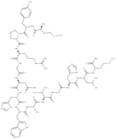
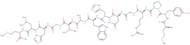
:Gastrin Releasing Peptide (14-27)
Description:
Gastrin Releasing Peptide (14-27), also known by its CAS number 81608-29-9, is a peptide that plays a significant role in various physiological processes, particularly in the gastrointestinal system. This peptide is derived from the larger gastrin-releasing peptide and consists of a sequence of amino acids that facilitates the release of gastrin, a hormone that stimulates gastric acid secretion. Characteristically, it is a hydrophilic molecule, which influences its solubility and interaction with receptors in the body. Gastrin Releasing Peptide (14-27) is involved in regulating digestive functions and has been studied for its potential implications in appetite regulation and gastrointestinal motility. Additionally, it may have roles in the central nervous system, influencing neuropeptide signaling. The peptide's biological activity is mediated through specific receptors, which are part of the bombesin receptor family. Overall, Gastrin Releasing Peptide (14-27) is an important molecule in both endocrine and neuroendocrine signaling pathways, contributing to the complex regulation of digestive and metabolic processes.
Sort by
Purity (%)
0
100
|
0
|
50
|
90
|
95
|
100
Found 3 products.
GRP (14-27) (human, porcine, canine)
CAS:Bachem ID: 4011671.
Formula:C75H110N24O16S2Purity:97.9%Color and Shape:White PowderMolecular weight:1667.98GRP (14-27) (human, porcine, canine)
CAS:GRP (14-27) (human, porcine, canine) functions as a ligand for bombesin receptors, with its specific binding being inhibited by GTP and GDP, while GMP does notFormula:C75H110N24O16S2Purity:98%Color and Shape:SolidMolecular weight:1667.96GRP (14-27) (human, porcine, canine) trifluoroacetate salt
CAS:GRP (14-27) is a synthetic peptide that has an inhibitory effect on the growth of pancreatic cancer cells. It also inhibits the development of primary tumors in hamsters and inhibits tumor metastasis. GRP (14-27) binds to the cell surface receptor on T cells, which is responsible for mediating immune responses against tumors. GRP (14-27) has been shown to suppress tumor growth through immunoreactivity and has been found to be effective against a variety of cancers when used as an adjuvant therapy.Formula:C75H110N24O16S2Purity:Min. 95%Molecular weight:1,667.96 g/mol