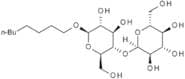
CAS 82494-08-4
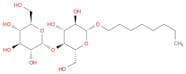
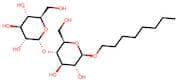
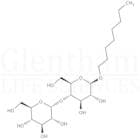
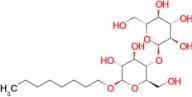
:N-octyl B-D-maltoside
Description:
N-octyl β-D-maltoside is a non-ionic surfactant commonly used in biochemistry and molecular biology applications. It is characterized by its amphiphilic nature, possessing both hydrophilic (water-attracting) and hydrophobic (water-repelling) properties due to its maltoside structure and octyl chain. This compound facilitates the solubilization of membrane proteins and other hydrophobic molecules in aqueous solutions, making it valuable in protein purification and stabilization processes. N-octyl β-D-maltoside is typically a white to off-white powder or solid, and it is soluble in water, forming micelles at higher concentrations. Its critical micelle concentration (CMC) is an important property, as it indicates the concentration at which micelles begin to form. Additionally, it is generally considered to be mild and non-toxic, which is advantageous for biological applications. The compound is also stable under a range of pH conditions, making it suitable for various experimental setups. Overall, N-octyl β-D-maltoside is a versatile reagent in biochemical research.
Formula:C20H38O11
InChI:InChI=1/C20H38O11/c1-2-3-4-5-6-7-8-28-19-17(27)15(25)18(12(10-22)30-19)31-20-16(26)14(24)13(23)11(9-21)29-20/h11-27H,2-10H2,1H3/t11-,12-,13-,14+,15-,16-,17-,18-,19-,20-/m1/s1
Synonyms:- Octyl maltopyranoside
- n-Octyl-beta-D-maltopyranoside
- beta-D-Glucopyranoside, octyl 4-O-alpha-D-glucopyranosyl-
- octyl 4-O-alpha-D-glucopyranosyl-beta-D-glucopyranoside
Sort by
Purity (%)
0
100
|
0
|
50
|
90
|
95
|
100
Found 5 products.
N-octyl-β-D-maltopyranoside
CAS:Formula:C20H38O11Purity:97%Color and Shape:SolidMolecular weight:454.5091n-Octyl β-D-maltoside
CAS:n-Octyl β-D-maltoside (OBM) is a fatty acid that is used as a sample preparation agent. OBM is chemically stable and has been shown to be non-carcinogenic in mammalian tissue. The structural analysis of OBM revealed that the molecule contains two nitrogen atoms, one on each end. In addition, OBM binds to antimicrobial peptides and inhibits their activity by preventing them from binding to their target site on the bacterial membrane. OBM also has anti-cancer properties due to its ability to prevent the proliferation of cervical cancer cells.Formula:C20H38O11Purity:Min. 98 Area-%Color and Shape:White PowderMolecular weight:454.51 g/mol