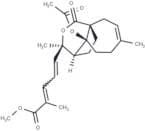
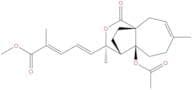
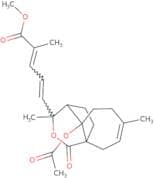
CAS 82508-33-6
:Methyl pseudolarate A
Description:
Methyl pseudolarate A is a natural compound derived from the bark of the Pseudolarix amabilis tree, commonly known as the golden larch. This substance is classified as a diterpenoid, which is a type of chemical compound composed of four isoprene units, resulting in a structure that often exhibits significant biological activity. Methyl pseudolarate A has garnered interest in the field of medicinal chemistry due to its potential pharmacological properties, including anti-inflammatory and anti-cancer effects. Its mechanism of action may involve the modulation of various cellular pathways, although specific details are still under investigation. The compound is typically characterized by its unique molecular structure, which includes specific functional groups that contribute to its reactivity and biological interactions. As with many natural products, the extraction and purification processes are crucial for obtaining methyl pseudolarate A in a form suitable for research and potential therapeutic applications. Further studies are needed to fully elucidate its properties and potential uses in medicine.
Formula:C23H30O6
Synonyms:- Methyl pseudolarate A
- 2,4-Pentadienoic acid, 5-[(3R,4S,4aS,9aR)-4a-(acetyloxy)-3,4,4a,5,6,9-hexahydro-3,7-dimethyl-1-oxo-1H-4,9a-ethanocyclohepta[c]pyran-3-yl]-2-methyl-, methyl ester, (2E,4E)-
Sort by
Purity (%)
0
100
|
0
|
50
|
90
|
95
|
100
Found 3 products.
Methyl pseudolarate A
CAS:Methyl pseudolarate A is a natural product of Pseudolarix, Pinaceae.Formula:C23H30O6Purity:98%Color and Shape:SolidMolecular weight:402.487Methyl pseudolarate A
CAS:Formula:C23H30O6Purity:95%~99%Color and Shape:PowderMolecular weight:402.487Methyl pseudolarate A
CAS:Methyl pseudolarate A is a naturally occurring diterpenoid, which is derived from the traditional Chinese medicinal plant Pseudolarix kaempferi. It functions primarily through a mechanism of action that involves disrupting microtubule dynamics, ultimately inhibiting cell division and promoting apoptosis. This specific mode of action makes it particularly effective as an antifungal and anticancer agent.Formula:C23H30O6Purity:Min. 95%Molecular weight:402.5 g/mol