CAS 82668-20-0
:2-chloro-4-hydroxy-3-methoxybenzaldehyde
Description:
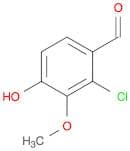
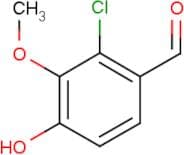
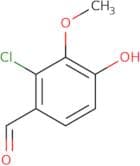
2-Chloro-4-hydroxy-3-methoxybenzaldehyde, with the CAS number 82668-20-0, is an organic compound that belongs to the class of substituted benzaldehydes. It features a benzene ring substituted with a chloro group, a hydroxy group, and a methoxy group, which contribute to its chemical properties and reactivity. The presence of the aldehyde functional group (-CHO) makes it a reactive compound, particularly in nucleophilic addition reactions. The hydroxy group (-OH) can participate in hydrogen bonding, enhancing its solubility in polar solvents, while the methoxy group (-OCH3) can influence its electronic properties and steric hindrance. This compound may exhibit biological activity, making it of interest in pharmaceutical research. Its structural characteristics suggest potential applications in organic synthesis and as an intermediate in the production of more complex molecules. Safety data should be consulted for handling and storage, as with any chemical substance, to ensure proper precautions are taken.
Formula:C8H7ClO3
InChI:InChI=1/C8H7ClO3/c1-12-8-6(11)3-2-5(4-10)7(8)9/h2-4,11H,1H3
SMILES:COc1c(ccc(C=O)c1Cl)O
Synonyms:- 2-Chlor-4-hydroxy-3-methoxybenzaldehyd
- Chloro-4-Hydroxy-3-Methoxybenzaldehyde
Sort by
Purity (%)
0
100
|
0
|
50
|
90
|
95
|
100
Found 3 products.
2-Chloro-4-hydroxy-3-methoxybenzaldehyde
CAS:2-Chloro-4-hydroxy-3-methoxybenzaldehydePurity:>98%Molecular weight:186.59g/mol2-Chloro-4-hydroxy-3-methoxybenzaldehyde
CAS:2-Chloro-4-hydroxy-3-methoxybenzaldehyde (4CMB) is a benzaldehyde derivative with a syringic acid moiety. It has been shown to have antiallergic effects and can be used in the treatment of asthma and other allergic diseases. The demethylation of 4CMB produces 2,4,6-trimethoxybenzaldehyde (2,4,6TMB). This compound has been shown to have antimicrobial properties against methicillin resistant Staphylococcus aureus and Clostridium perfringens. 4CMB also has the ability to inhibit the proliferation of cancer cells in vitro by binding to DNA sequences that are involved in transcriptional regulation.Formula:C8H7ClO3Purity:Min. 95%Molecular weight:186.59 g/mol