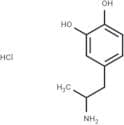
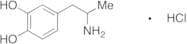
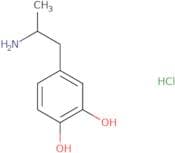
CAS 828-06-8
:1,2-Benzenediol, 4-(2-aminopropyl)-, hydrochloride
Description:
1,2-Benzenediol, 4-(2-aminopropyl)-, hydrochloride, commonly known as 4-(2-aminopropyl)catechol hydrochloride, is a chemical compound characterized by its aromatic structure and the presence of both hydroxyl and amino functional groups. It features a catechol moiety, which contributes to its reactivity and potential applications in various fields, including pharmaceuticals and organic synthesis. The hydrochloride form indicates that the compound is a salt, enhancing its solubility in water and making it more suitable for biological applications. This compound may exhibit properties such as antioxidant activity due to the catechol structure, and it can participate in various chemical reactions, including oxidation and substitution. Its amino group allows for further derivatization, making it a versatile intermediate in organic synthesis. Safety data should be consulted for handling, as with many chemical substances, it may pose health risks if not managed properly. Overall, 1,2-Benzenediol, 4-(2-aminopropyl)-, hydrochloride is a significant compound in both research and industrial contexts.
Formula:C9H13NO2・ClH
Sort by
Purity (%)
0
100
|
0
|
50
|
90
|
95
|
100
Found 3 products.
3,4-Dihydroxyamphetamine hydrochloride
CAS:3,4-Dihydroxyamphetamine (α-Methyldopamine) (hydrochloride) is a minor metabolite of 3,4-Methylenedioxymethamphetamine (MDMA) and exhibits cytotoxicity in rat hepatocytes. Additionally, 3,4-Dihydroxyamphetamine (hydrochloride) is applicable in hypertension research.Formula:C9H14ClNO2Color and Shape:SolidMolecular weight:203.673,4-Dihydroxy Amphetamine Hydrochloride
CAS:Controlled ProductFormula:C9H13NO2·ClHColor and Shape:NeatMolecular weight:203.6663,4-Dihydroxy amphetamine hydrochloride
CAS:Controlled Product3,4-Dihydroxy amphetamine hydrochloride is a metabolite of amphetamine. It is a chemical intermediate in the metabolism of amphetamine and therefore has similar pharmacological effects. 3,4-Dihydroxy amphetamine hydrochloride is not embryotoxic or teratogenic in rats or mice at doses as high as 2000 mg/kg. The concentration range for humans is unknown. 3,4-Dihydroxy amphetamine hydrochloride has been shown to inhibit the production of dopamine in the brain and may be associated with neurotoxicity.Formula:C9H14ClNO2Purity:Min. 95%Molecular weight:203.67 g/mol