CAS 82827-08-5
:5-nitroisoquinolin-1(2H)-one
Description:
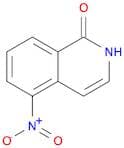
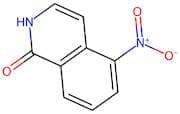
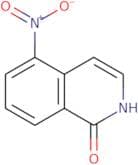
5-Nitroisoquinolin-1(2H)-one is a heterocyclic organic compound characterized by its isoquinoline structure, which features a fused benzene and pyridine ring system. The presence of a nitro group (-NO2) at the 5-position and a carbonyl group (C=O) at the 1-position contributes to its chemical reactivity and potential applications in various fields, including medicinal chemistry. This compound is typically a yellow to orange solid and is soluble in organic solvents, reflecting its aromatic nature. Its molecular structure allows for various interactions, making it a candidate for studies in drug development, particularly in the synthesis of bioactive molecules. Additionally, the nitro group can participate in reduction reactions, potentially leading to derivatives with different biological activities. As with many nitro-containing compounds, care should be taken regarding its handling and storage due to potential toxicity and environmental concerns. Overall, 5-nitroisoquinolin-1(2H)-one serves as an important building block in organic synthesis and pharmaceutical research.
Formula:C9H6N2O3
InChI:InChI=1/C9H6N2O3/c12-9-7-2-1-3-8(11(13)14)6(7)4-5-10-9/h1-5H,(H,10,12)
SMILES:c1cc2c(ccnc2O)c(c1)N(=O)=O
Synonyms:- 1(2H)-isoquinolinone, 5-nitro-
Sort by
Purity (%)
0
100
|
0
|
50
|
90
|
95
|
100
Found 4 products.
5-NITRO-1(2H)-ISOQUINOLINONE
CAS:Formula:C9H6N2O3Purity:97%Color and Shape:SolidMolecular weight:190.15555-nitro-1(2H)-isoquinolinone
CAS:5-Nitro-1(2H)-isoquinolinone is a constitutive metabolite of 5-nitroimidazole. It can be transformed into nitrite and then nitrate, which are excreted in the urine. Hydrolysis occurs by esterases or glucuronidases. The high frequency of human activity has been shown using a patch-clamp technique on human erythrocytes. This active form is metabolized through a number of metabolic transformations, including hydrolysis by esterases or glucuronidases, oxidation by cytochrome P450 enzymes, reduction by glutathione reductase, or conjugation with glucuronic acid. Rifapentine also specifically binds to markers expressed at high levels in Mycobacterium tuberculosis strains (e.g., ESX-1 secretion system protein) and inhibits cell growth in culture.END> END>Formula:C9H6N2O3Purity:Min. 95%Molecular weight:190.15 g/mol