CAS 834-24-2
:4-Aminostilbene
Description:
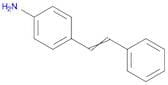
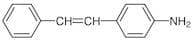
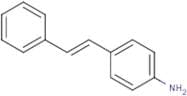
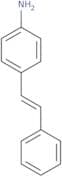
4-Aminostilbene is an organic compound characterized by its structure, which consists of a stilbene backbone with an amino group (-NH2) attached to one of the phenyl rings. This compound is typically a white to light yellow crystalline solid and is known for its role in various chemical applications, including as a fluorescent whitening agent and in organic synthesis. It exhibits properties such as moderate solubility in organic solvents and limited solubility in water. The presence of the amino group allows for potential reactivity in electrophilic aromatic substitution reactions, making it a useful intermediate in the synthesis of dyes and pharmaceuticals. Additionally, 4-Aminostilbene can exhibit photophysical properties, including fluorescence, which can be harnessed in materials science and biological applications. Safety considerations should be taken into account, as with many organic compounds, including proper handling and disposal procedures to mitigate any potential health risks.
Formula:C14H13N
InChI:InChI=1S/C14H13N/c15-14-10-8-13(9-11-14)7-6-12-4-2-1-3-5-12/h1-11H,15H2
InChI key:InChIKey=VFPLSXYJYAKZCT-UHFFFAOYSA-N
SMILES:C(=CC1=CC=CC=C1)C2=CC=C(N)C=C2
Synonyms:- 4-(2-Phenylethenyl)Aniline
- 4-(2-Phenylethenyl)benzenamine
- 4-N-Stilbenamine
- 4-Stilbenamine
- 4-Styrylaniline
- 4-[(E)-2-phenylethenyl]aniline
- Benzenamine, 4-(2-phenylethenyl)-
- Benzenamine, 4-(2-phenylethenyl)- (9CI)
- Ccris 1872
- Nsc 36396
- p-Aminostilbene
- p-Styrylaniline
- See more synonyms
Sort by
Purity (%)
0
100
|
0
|
50
|
90
|
95
|
100
Found 4 products.
4-Aminostilbene
CAS:Formula:C14H13NPurity:>97.0%(T)(HPLC)Color and Shape:White to Light orange to Yellow powder to crystalMolecular weight:195.274-Aminostilbene
CAS:4-Aminostilbene is a fluorescent stilbene derivative that is used as a synthetic estrogen. It has been shown to possess anti-inflammatory properties and inhibit the production of reactive oxygen species in target tissues. 4-Aminostilbene also possesses anti-cancer properties and has been shown to be effective against Pseudomonas aeruginosa. The mechanism of action for this compound is thought to be via its ability to react with amines, forming diazonium salts in an organic solution.
Formula:C14H13NPurity:Min. 95%Molecular weight:195.27 g/molRef: 3D-AAA83424
Discontinued product