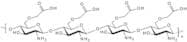
CAS 83512-85-0
:N-Carboxymethylchitosan
Description:
N-Carboxymethylchitosan is a derivative of chitosan, which is a biopolymer obtained from chitin, primarily found in the shells of crustaceans. This compound is characterized by the introduction of carboxymethyl groups, which enhance its solubility in water and improve its functional properties. N-Carboxymethylchitosan exhibits biocompatibility and biodegradability, making it suitable for various biomedical applications, including drug delivery systems, wound healing, and tissue engineering. Its chemical structure allows for the formation of hydrogels, which can be utilized in controlled release formulations. Additionally, this substance possesses antimicrobial properties, which can be beneficial in preventing infections in medical applications. The degree of substitution of the carboxymethyl groups can influence its physical and chemical properties, such as viscosity and solubility. Overall, N-Carboxymethylchitosan is a versatile biomaterial with significant potential in pharmaceutical and environmental applications due to its natural origin and functional characteristics.
Formula:Unspecified
Synonyms:- Carboxymethylchitosan
- Chitosan, N-(carboxymethyl)
- N-Carboxymethylchitosan
- C 0001
Sort by
Purity (%)
0
100
|
0
|
50
|
90
|
95
|
100
Found 8 products.
Chitosan, N-(carboxymethyl)
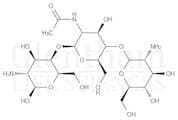
CAS:Formula:C17H30N2O11Purity:90%Color and Shape:SolidMolecular weight:438.4269Carboxymethyl chitosan
CAS:Color and Shape:White to light yellow or pale beige powderMolecular weight:-Carboxymethyl chitosan (10 - 80 cps), suitable for microbiology
CAS:Color and Shape:White to light yellow or pale beige powderCarboxymethyl chitosan (10 - 80 cps), fungal origin
CAS:Color and Shape:White, off-white or pale yellow powderCarboxymethyl Chitosan
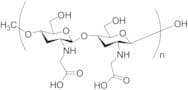
CAS:Controlled ProductFormula:(C6H26N2O10)nColor and Shape:NeatMolecular weight:543.5Carboxymethyl chitosan
CAS:Carboxymethyl chitosan has good solubility in water and unique chemical, physical and biological properties such as high viscosity, large hydrodynamic volume, low toxicity, biocompatibility and good ability to form films, fibres and hydrogels. For this reason, it has been extensively used in many biomedical fields such as a moisture-retention agent, bactericide, wound dressing agent, in artificial bone and skin, as blood anticoagulant and as a component in different drug delivery matrices. The reactive ligands COOH and NH2 groups are available for metal chelation and dye binding.Color and Shape:White Powder