CAS 83589-17-7
:Neuropeptide Y (porcine)
Description:
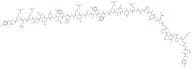
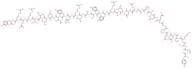
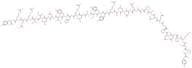
Neuropeptide Y (porcine), with the CAS number 83589-17-7, is a peptide that plays a significant role in various physiological processes, particularly in the central nervous system and peripheral tissues. It consists of 36 amino acids and is known for its involvement in regulating appetite, anxiety, circadian rhythms, and cardiovascular functions. Neuropeptide Y is produced primarily in the brain and is released in response to stress, influencing food intake and energy balance. Its structure features a conserved C-terminal region that is critical for receptor binding and biological activity. The peptide interacts with specific neuropeptide Y receptors, which are G-protein coupled receptors, mediating its effects on neuronal signaling. In porcine species, this neuropeptide is particularly studied for its implications in growth, metabolism, and stress responses, making it a subject of interest in both veterinary and biomedical research. Overall, neuropeptide Y is a vital component of neuroendocrine signaling, with diverse roles in maintaining homeostasis and responding to environmental changes.
Formula:C10H287N55O57
InChI:InChI=1/C190H286N54O58/c1-16-94(9)149(180(296)234-129(81-140(193)253)169(285)226-124(74-93(7)8)172(288)239-150(95(10)17-2)181(297)240-151(100(15)247)182(298)221-116(32-23-67-208-190(202)203)156(272)220-119(59-62-145(260)261)161(277)218-114(30-21-65-206-188(198)199)157(273)223-121(152(195)268)76-102-39-49-108(249)50-40-102)238-173(289)127(79-105-45-55-111(252)56-46-105)229-168(284)128(80-106-86-204-90-210-106)230-159(275)115(31-22-66-207-189(200)201)219-165(281)123(73-92(5)6)224-155(271)97(12)212-174(290)134(88-245)236-167(283)126(78-104-43-53-110(251)54-44-104)228-166(282)125(77-103-41-51-109(250)52-42-103)227-158(274)113(29-20-64-205-187(196)197)216-153(269)96(11)211-163(279)122(72-91(3)4)225-170(286)131(84-147(264)265)232-162(278)118(58-61-144(258)259)217-154(270)98(13)213-177(293)137-34-25-68-241(137)183(299)99(14)214-164(280)130(83-146(262)263)231-160(276)117(57-60-143(256)257)215-142(255)87-209-176(292)136-33-24-70-243(136)186(302)133(82-141(194)254)235-171(287)132(85-148(266)267)233-178(294)139-36-27-71-244(139)185(301)120(28-18-19-63-191)222-175(291)135(89-246)237-179(295)138-35-26-69-242(138)184(300)112(192)75-101-37-47-107(248)48-38-101/h37-56,86,90-100,112-139,149-151,245-252H,16-36,57-85,87-89,191-192H2,1-15H3,(H2,193,253)(H2,194,254)(H2,195,268)(H,204,210)(H,209,292)(H,211,279)(H,212,290)(H,213,293)(H,214,280)(H,215,255)(H,216,269)(H,217,270)(H,218,277)(H,219,281)(H,220,272)(H,221,298)(H,222,291)(H,223,273)(H,224,271)(H,225,286)(H,226,285)(H,227,274)(H,228,282)(H,229,284)(H,230,275)(H,231,276)(H,232,278)(H,233,294)(H,234,296)(H,235,287)(H,236,283)(H,237,295)(H,238,289)(H,239,288)(H,240,297)(H,256,257)(H,258,259)(H,260,261)(H,262,263)(H,264,265)(H,266,267)(H4,196,197,205)(H4,198,199,206)(H4,200,201,207)(H4,202,203,208)/t94-,95-,96-,97-,98-,99-,100+,112-,113-,114-,115-,116-,117-,118-,119-,120-,121-,122-,123-,124-,125-,126-,127-,128-,129-,130-,131-,132-,133-,134-,135-,136-,137-,138-,139-,149-,150-,151-/m0/s1
Synonyms:- H-Tyr-Pro-Ser-Lys-Pro-Asp-Asn-Pro-Gly-Glu-Asp-Ala-Pro-Ala-Glu-Asp-Leu-Ala-Arg-Tyr-Tyr-Ser-Ala-Leu-Arg-His-Tyr-Ile-Asn-Leu-Ile-Thr-Arg-Gln-Arg-Tyr-NH2
- Neuropeptide Y (13-36), Porcine Syntheti C >97%
Sort by
Purity (%)
0
100
|
0
|
50
|
90
|
95
|
100
Found 6 products.
Neuropeptide Y, Porcine
CAS:<p>For cellular and molecular biology applications</p>Formula:C190H287N55O57Molecular weight:4253.7Neuropeptide Y (porcine)
CAS:<p>Bachem ID: 4011654.</p>Formula:C190H287N55O57Purity:97.3%Color and Shape:White LyophilisateMolecular weight:4253.71NPY (Porcine, Bovine)
CAS:<p>NPY is a peptide that belongs to the family of neuropeptides. NPY regulates appetite and energy expenditure, among other physiological processes, by binding to receptors in the brain. NPY has been shown to be an inhibitor of protein interactions, activator of ligands, and a receptor for antibodies. This peptide is synthesized in the hypothalamus as well as other parts of the central nervous system. NPY is also found in blood platelets, pancreas, and intestines.</p>Formula:C190H287N55O57Purity:Min. 95%Molecular weight:4,253.6 g/molNPY (Porcine, Bovine)
CAS:<p>NPY is a peptide that belongs to the family of neuropeptides. It is an endogenous regulator of appetite and energy expenditure in the central nervous system, which has been shown to act as a neurotransmitter and neuromodulator. NPY is also an activator of ion channels, such as potassium channels, sodium channels, and calcium channels. NPY has been shown to bind with high affinity to receptors in the brain, heart, lungs, kidneys, and intestines. The binding of NPY to its receptor leads to activation of protein interactions. This process can lead to changes in cell physiology or regulation of physiological functions by altering gene expression or changing the concentration of ions in the blood. NPY has also been shown as an inhibitor for many different ligands and receptors including dopamine D1 receptors and serotonin 5-HT2A/C receptors.</p>Formula:C190H287N55O57Purity:Min. 95%Molecular weight:4,253.6 g/molNeuropeptide Y (porcine) trifluoroacetate salt
CAS:<p>Neuropeptide Y (porcine) trifluoroacetate salt H-Tyr-Pro-Ser-Lys-Pro-Asp-Asn-Pro-Gly-Glu-Asp-Ala-Pro-Ala-Glu-Asp-Leu -Ala -Arg Tyr Tyr Ser Ala Leu Arg His Tyr Ile Asn Leu Ile Thr Arg Gln Arg Tyr NH2 trifluoroacetate salt is a peroxidase enzyme that is biotinylated and purified from porcine sources. It has been used as an antiserum in the development of a plate sealer.</p>Formula:C190H287N55O57Purity:Min. 95%Molecular weight:4,253.65 g/molNeuropeptide Y (pig)
CAS:Formula:C190H287N55O57Purity:98%Color and Shape:SolidMolecular weight:4253.6461Ref: IN-DA01E9QM
Discontinued product