CAS 83857-96-9
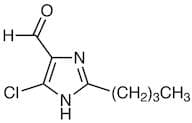
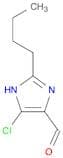
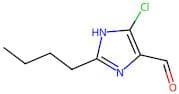
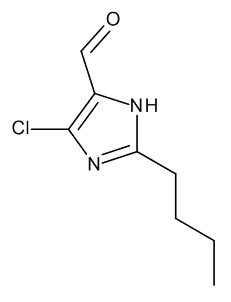
:2-Butyl-4-chloro-5-formylimidazole
Description:
2-Butyl-4-chloro-5-formylimidazole is an organic compound characterized by its imidazole ring, which is a five-membered heterocyclic structure containing two nitrogen atoms. The presence of a butyl group contributes to its hydrophobic characteristics, while the chloro and formyl substituents introduce polar functional groups that can participate in various chemical reactions. This compound is typically used in organic synthesis and may serve as an intermediate in the production of pharmaceuticals or agrochemicals. Its reactivity is influenced by the electron-withdrawing nature of the chloro and formyl groups, which can enhance electrophilic attack at the imidazole ring. Additionally, the compound's solubility and stability can vary depending on the solvent and environmental conditions. Safety data should be consulted, as halogenated compounds can pose health risks, and appropriate handling procedures should be followed. Overall, 2-Butyl-4-chloro-5-formylimidazole is a versatile compound with potential applications in various fields of chemistry.
Formula:C8H11ClN2O
InChI:InChI=1S/C8H11ClN2O/c1-2-3-4-7-10-6(5-12)8(9)11-7/h5H,2-4H2,1H3,(H,10,11)
InChI key:InChIKey=JLVIHQCWASNXCK-UHFFFAOYSA-N
SMILES:C(CCC)C=1NC(C=O)=C(Cl)N1
Synonyms:- (2-n-Butyl-5-Chloro-imidazole-4-yl)-Carboxaldehyde
- 1H-Imidazole-4-carboxaldehyde, 2-butyl-5-chloro-
- 2-Butyl-4-Chloro-1H-Imidazole-5-Carbaldehyde
- 2-Butyl-4-Chloro-1H-Imidazole-5-Carboxaldehyde
- 2-Butyl-4-Chloro-1H-imidazo-5-Carboxaldehyde
- 2-Butyl-4-Chloro-5-Imidazole Carboxaldehyde
- 2-Butyl-4-Chloro-5-Imidazolecarboxaldehyde
- 2-Butyl-4-Chloro-5-formyl imidazole
- 2-Butyl-4-Chloro-5-formylimidazloe
- 2-Butyl-4-Chloro-5-formylimidazole
- 2-Butyl-4-Chloro-Imidazole-5-Carbaldehyde
- 2-Butyl-4-chloro-1-H-imidazole-5-carboxaldehyde
- 2-Butyl-4-chloro-1H-imidazolyl-5-carboxaldehyde
- 2-Butyl-4-chloro-5-formylimidazole(BCFI)
- 2-Butyl-4-chloroimidazole-5-carbaldehyde
- 2-Butyl-4-chloroimidazole-5-carboxaldehyde
- 2-Butyl-5-Chloro-1H-Imidazole-4-Carbaldehyde
- 2-Butyl-5-Chloroimidazole-4-Carboxaldehyde
- 2-Butyl-5-chloro-3H-imidazole-4-carboxaldehyde
- 2-Butyl-5-chloro-4-formylimidazole
- 2-Butyl-5-chloroimidazole-4-carbaldehyde
- 2-Butyl-5-formyl-4-chloroimidazole
- 2-n-Butyl-4-Chloro-1H-Imidazole-5-Carboxaldehyde
- 2-n-Butyl-4-chloro-5-imidazolecarboxaldehyde
- 2-n-Butyl-5-chlorimidazole-4-carbaldehyde
- 4-Chloro-2-n-butylimidazole-5-carboxaldehyde
- Bcfi
- See more synonyms
Sort by
Purity (%)
0
100
|
0
|
50
|
90
|
95
|
100
Found 11 products.
2-Butyl-5-chloro-1H-imidazole-4-carboxaldehyde
CAS:Formula:C8H11ClN2OPurity:>98.0%(GC)Color and Shape:Light yellow to Yellow to Orange powder to crystalMolecular weight:186.64Losartan Related Compound A (2-Butyl-4-chloro-1H-imidazole-5-carbaldehyde)
CAS:Compounds containing an unfused imidazole ring (whether or not hydrogenated) in the structure nesoiFormula:C8H11ClN2OColor and Shape:PowderMolecular weight:186.055992-Butyl-4-chloro-5-formylimidazole
CAS:Formula:C8H11ClN2OPurity:95%Color and Shape:SolidMolecular weight:186.63872-(But-1-yl)-5-chloro-1H-imidazole-4-carboxaldehyde
CAS:2-(But-1-yl)-5-chloro-1H-imidazole-4-carboxaldehydeFormula:C8H11ClN2OPurity:97%Color and Shape: pale yellow solidMolecular weight:186.64g/molLosartan EP Impurity D (Losartan USP Related Compound A)
CAS:Formula:C8H11ClN2OMolecular weight:186.642-Butyl-4-chloro-1H-imidazole-5-carbaldehyde
CAS:Controlled ProductFormula:C8H11ClN2OColor and Shape:NeatMolecular weight:186.642-Butyl-4-chloro-1H-imidazole-5-carboxaldehyde
CAS:Formula:C8H11ClN2OColor and Shape:Light Yellow To BrownMolecular weight:186.642-Butyl-5-chloro-4-formylimidazole
CAS:Formula:C8H11ClN2OPurity:95%Color and Shape:SolidMolecular weight:186.642-Butyl-4-chloro-1H-imidazole-5-carboxaldehyde
CAS:Glyoxal is a chemical compound that has shown to have bactericidal activity against human pathogens such as Mycobacterium tuberculosis, Helicobacter pylori, and Staphylococcus aureus. It is used in the synthesis of heterocyclic amines and can be found as an impurity in imidazole derivatives. Glyoxal is a broad-spectrum antimicrobial that has been shown to inhibit the growth of fungi and bacteria by reacting with functional groups on the microorganisms' cell walls. It reacts with bacterial cell walls by forming an intermediate molecule, which reacts with other molecules present in the microorganism's environment to form carbon dioxide, water, and glyoxal. The reaction time for glyoxal depends on temperature; higher temperatures will result in faster reactions. Techniques used to synthesize glyoxal include dehydration of oximes or by reaction with phosphorus oxychloride.Formula:C8H11ClN2OPurity:Min. 95%Color and Shape:PowderMolecular weight:186.64 g/mol