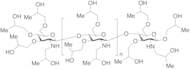
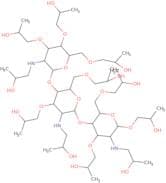
CAS 84069-44-3
:Chitofilmer
Description:
Chitofilmer, with the CAS number 84069-44-3, is a chemical substance primarily used in various industrial applications, particularly in the field of agriculture and food processing. It is known for its properties as a biopolymer, derived from chitin, which is a natural polymer found in the exoskeletons of crustaceans and insects. Chitofilmer exhibits film-forming capabilities, making it useful as a coating agent that can enhance the shelf life of food products by providing a barrier to moisture and oxygen. Additionally, it possesses biodegradable characteristics, aligning with environmentally friendly practices. The substance is also recognized for its potential antimicrobial properties, which can help in preserving food and preventing spoilage. Its applications extend to pharmaceuticals and cosmetics, where it can serve as a stabilizer or thickening agent. Overall, Chitofilmer is valued for its versatility, safety, and sustainability in various formulations.
- Chitosan, 2-hydroxypropyl ether
- Hydroxy Propyl Chitosan Powder - Aqueous
- Hydroxypropyl Chitosan Powder
Sort by
Purity (%)
0
100
|
0
|
50
|
90
|
95
|
100
Found 3 products.
Hydroxypropyl Chitosan
CAS:Controlled ProductApplications Hydroxypropyl Chitosan is an antibacterial used to make organic rectorite-based nanofibrous mats with bacterial inhibition. Hydroxypropyl Chitosanhas been shown to exhibit inhibitory effects on the levels of Fe, Zn and Ca in liver, heart, lung, spleen, kidney and femur at high dosages in mice.
References Deng, H., et. al.: J. Biotma. Sci-Polym. E., 24, 485 (2013); Wang, Z., et. al.: Int. J. Biol. Macromol., 64, 25 (2014);Formula:C36H72N2O17C15H29NO7nColor and Shape:Light Yellow To BrownMolecular weight:1140.353Hydroxypropyl chitosan
CAS:Hydroxypropyl chitosan is a biopolymer that can be used to treat tissue infections. It has been shown to have a low cytotoxicity and good antimicrobial activity against bacteria and fungi in vitro. Hydroxypropyl chitosan is synthesized by the reaction of chitosan with propylene oxide, which results in a covalent attachment of hydroxypropyl groups to the nitrogen atoms on the chitosan backbone. This polymer has been shown to be effective against methicillin-resistant Staphylococcus aureus (MRSA) and Candida albicans, with inhibitory concentrations that are lower than those for other polymers. Hydroxypropyl chitosan is also able to reduce biofilm formation by inhibiting microbial adhesion and spreading.Formula:C36H72N2O17(C15H29NO7)nPurity:Min. 95%Molecular weight:804.96 g/mol