CAS 842959-64-2
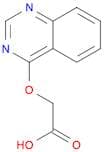
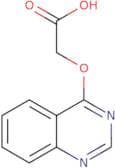
:(quinazolin-4-yloxy)acetic acid
Description:
(Quinazolin-4-yloxy)acetic acid is a chemical compound characterized by its quinazoline core structure, which is a bicyclic compound containing a benzene ring fused to a pyrimidine ring. This compound features an acetic acid functional group, which contributes to its potential as a bioactive molecule. The presence of the quinazolin-4-yloxy moiety suggests that it may exhibit various biological activities, possibly including anti-inflammatory or anti-cancer properties, as many quinazoline derivatives are known for their pharmacological effects. The compound is likely to be a solid at room temperature, with solubility characteristics that may vary depending on the solvent used. Its molecular structure allows for potential interactions with biological targets, making it of interest in medicinal chemistry. Additionally, the presence of the carboxylic acid group may influence its acidity and reactivity, which could be relevant in synthetic applications or biological interactions. As with many chemical substances, safety data and handling precautions should be considered when working with this compound.
Formula:C10H8N2O3
InChI:InChI=1/C10H8N2O3/c13-9(14)5-15-10-7-3-1-2-4-8(7)11-6-12-10/h1-4,6H,5H2,(H,13,14)
SMILES:c1ccc2c(c1)c(ncn2)OCC(=O)O
Synonyms:- Acetic Acid, 2-(4-Quinazolinyloxy)-
Sort by
Purity (%)
0
100
|
0
|
50
|
90
|
95
|
100
Found 3 products.
2-(Quinazolin-4-Yloxy)Acetic Acid
CAS:Formula:C10H8N2O3Purity:95%Color and Shape:SolidMolecular weight:204.1821(Quinazolin-4-yloxy)-acetic acid
CAS:Formula:C10H8N2O3Purity:95.0%Color and Shape:SolidMolecular weight:204.185(Quinazolin-4-yloxy)-acetic acid
CAS:Quinazolin-4-yloxy)-acetic acid is an immunogen that has been used to generate antibodies for the detection of cross-reactivity in a variety of plant, animal, and bacterial species. This compound is a quinazoline derivative that has been used to produce polyclonal antibodies and monoclonal antibodies. The antibody binds to a specific antigenic determinant on the surface of cells or viruses. Antibodies are produced by injecting animals with the immunogen under conditions that stimulate antibody production. These antibodies bind to the immunogen through their Fab regions and are used as probes in enzyme-linked immunosorbent assays (ELISA). This technique can be used to detect proteins, carbohydrates, lipids, or nucleic acids in complex biological samples.Formula:C10H8N2O3Purity:Min. 95%Molecular weight:204.2 g/mol