CAS 843-24-3
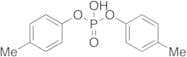
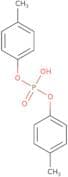
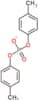
:bis(4-methylphenyl) phosphate
Description:
Bis(4-methylphenyl) phosphate, with the CAS number 843-24-3, is an organophosphate compound characterized by its phosphate group bonded to two 4-methylphenyl groups. This compound typically appears as a colorless to pale yellow liquid or solid, depending on its purity and temperature. It is known for its applications as a flame retardant and plasticizer in various materials, particularly in polymers. The presence of the methyl groups on the phenyl rings enhances its hydrophobic properties, making it effective in reducing flammability. Bis(4-methylphenyl) phosphate is also recognized for its potential environmental and health impacts, as organophosphates can be toxic to aquatic life and may pose risks to human health upon exposure. Its chemical structure contributes to its reactivity and stability under certain conditions, making it important in industrial applications. Proper handling and disposal are essential to mitigate any adverse effects associated with its use.
Formula:C14H14O4P
InChI:InChI=1/C14H15O4P/c1-11-3-7-13(8-4-11)17-19(15,16)18-14-9-5-12(2)6-10-14/h3-10H,1-2H3,(H,15,16)/p-1
SMILES:Cc1ccc(cc1)OP(=O)([O-])Oc1ccc(C)cc1
Sort by
Purity (%)
0
100
|
0
|
50
|
90
|
95
|
100
Found 2 products.
Di-p-tolyl-phosphate
CAS:Applications Di-p-tolyl-phosphate is a metabolite of tri-p-cresyl phosphate, a flame retardant plasticizer.
References Kurebayashi, H. et al.: Toxicol. App. Pharmacol., 77, 395 (1985);Formula:C14H15O4PColor and Shape:White To Off-WhiteMolecular weight:278.24Di-p-tolyl-phosphate-d14
CAS:Di-p-tolyl-phosphate is a toxic chemical that belongs to the methyl ester class. It can be found in polymers, plasticizers, and paints. Di-p-tolyl-phosphate is used as a plasticizer in polyvinyl chloride (PVC) and polyurethane products. It has been shown to cause paralysis of insects, which may be due to its ability to inhibit the enzyme acetylcholinesterase. Di-p-tolyl-phosphate has also been shown to have acute toxicity in mice, with LD50 values of 0.5 g/kg for males and 0.6 g/kg for females. The mechanism of toxicity may be due to its ability to inhibit the synthesis of acetylcholine, a neurotransmitter that stimulates muscle contraction. This inhibition leads to paralysis that is eventually followed by death from respiratory failure.Formula:C14H15O4PPurity:Min. 95%Molecular weight:278.24 g/mol