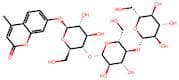
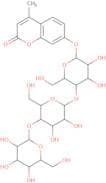
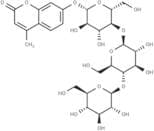
CAS 84325-18-8
:4-methylumbelliferyl B-D-cellotrioside
Description:
4-Methylumbelliferyl β-D-cellotrioside is a synthetic compound commonly used as a substrate in biochemical assays, particularly for the detection of specific glycosidase enzymes. This compound features a 4-methylumbelliferone moiety, which is a fluorescent marker, allowing for easy visualization of enzymatic activity. The β-D-cellotrioside part of the molecule consists of a trisaccharide structure, specifically composed of three glucose units linked by β-glycosidic bonds. This structure makes it a suitable substrate for enzymes that hydrolyze glycosidic bonds, such as cellulases. Upon enzymatic cleavage, the release of 4-methylumbelliferone results in an increase in fluorescence, which can be quantitatively measured. The compound is typically soluble in water and organic solvents, making it versatile for various experimental conditions. Its applications extend beyond enzyme assays to include studies in carbohydrate metabolism and cell biology. Overall, 4-methylumbelliferyl β-D-cellotrioside serves as a valuable tool in biochemical research for understanding enzyme kinetics and substrate specificity.
Formula:C28H38O18
Sort by
Purity (%)
0
100
|
0
|
50
|
90
|
95
|
100
Found 4 products.
4-Methylumbelliferyl β-D-cellotrioside
CAS:4-Methylumbelliferyl β-D-cellotriosidePurity:>98%Molecular weight:662.59g/mol4-Methylumbelliferyl b-D-cellotrioside
CAS:Fluorogenic cellulose analogueFormula:C28H38O18Purity:Min. 95%Color and Shape:PowderMolecular weight:662.6 g/mol4-Methylumbelliferyl β-cellotrioside
CAS:4-Methylumbelliferyl β-cellotrioside, a cellulose-derived fluorescent chromogenic substrate [1], is specifically hydrolyzed by β-glycosidases.Formula:C28H38O18Color and Shape:SolidMolecular weight:662.59