CAS 84501-64-4
:2-Piperazinecarboxamide
Description:
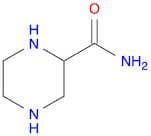
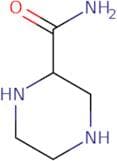
2-Piperazinecarboxamide, with the CAS number 84501-64-4, is a chemical compound characterized by its piperazine ring structure, which is a six-membered cyclic amine containing two nitrogen atoms. This compound typically exhibits properties associated with amides, such as the ability to form hydrogen bonds, which can influence its solubility and reactivity. It is often a white crystalline solid at room temperature and is soluble in polar solvents like water and alcohols. The presence of the carboxamide functional group contributes to its potential biological activity, making it of interest in pharmaceutical research. 2-Piperazinecarboxamide may also exhibit basic properties due to the nitrogen atoms in the piperazine ring, allowing it to interact with various biological targets. Its applications can range from medicinal chemistry to materials science, depending on its specific derivatives and modifications. As with many chemical substances, safety data should be consulted to understand its handling and potential hazards.
Formula:C5H11N3O
InChI:InChI=1/C5H11N3O/c6-5(9)4-3-7-1-2-8-4/h4,7-8H,1-3H2,(H2,6,9)
InChI key:InChIKey=BRYCUMKDWMEGMK-UHFFFAOYSA-N
SMILES:C(N)(=O)C1CNCCN1
Synonyms:- 2-Carbamoylpiperazine
- 2-Piperazinecarboxamide
- Piperazine-2-carboxamide
- PIPERAZINE-2-CARBOXAMIDE ISO 9001:2015 REACH
- 2-Piperazinecarboxamide(6CI,9CI)
- (+/-)-PIPERAZINE-2-AMIDE
- (+/-)-Piperazin-2-amide
Sort by
Purity (%)
0
100
|
0
|
50
|
90
|
95
|
100
Found 3 products.
Piperazine-2-carboxamide
CAS:Piperazine-2-carboxamide is a synthetic drug that is used to treat tuberculosis. It binds to the mycolic acid of the bacterial cell wall, preventing it from forming an outer layer and disrupting its function. Piperazine-2-carboxamide also inhibits the synthesis of fatty acids and amines in bacteria, which are necessary for their survival. This drug can be synthesized by reacting piperazine with formaldehyde and acetamide.
Formula:C5H11N3OPurity:Min. 95%Molecular weight:129.16 g/mol