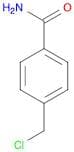
CAS 84545-14-2
:4-(chloromethyl)benzamide
Description:
4-(Chloromethyl)benzamide, with the CAS number 84545-14-2, is an organic compound characterized by the presence of a benzamide functional group substituted with a chloromethyl group at the para position. This compound typically appears as a white to off-white solid and is soluble in organic solvents such as dichloromethane and ethanol, but has limited solubility in water due to its hydrophobic aromatic structure. The chloromethyl group enhances its reactivity, making it a useful intermediate in organic synthesis, particularly in the preparation of various pharmaceuticals and agrochemicals. The presence of the amide functional group contributes to its ability to participate in hydrogen bonding, influencing its physical properties and reactivity. Additionally, 4-(Chloromethyl)benzamide may exhibit biological activity, which can be explored in medicinal chemistry contexts. Safety precautions should be taken when handling this compound, as it may pose health risks, including irritation or toxicity. Proper storage and disposal methods are essential to ensure safety in laboratory settings.
Formula:C8H8ClNO
InChI:InChI=1/C8H8ClNO/c9-5-6-1-3-7(4-2-6)8(10)11/h1-4H,5H2,(H2,10,11)
SMILES:c1cc(ccc1CCl)C(=O)N
Synonyms:- alpha-Chloro-p-toluamide
- Benzamide, 4-(Chloromethyl)-
Sort by
Purity (%)
0
100
|
0
|
50
|
90
|
95
|
100
Found 4 products.
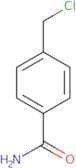
4-(Chloromethyl)benzamide
CAS:Formula:C8H8ClNOPurity:98%Color and Shape:SolidMolecular weight:169.60824-(Chloromethyl)benzamide
CAS:4-(Chloromethyl)benzamide is a potent inhibitor of cyclohexane ring formation in proteins and has been shown to be effective against bacteria, fungi, and parasites. 4-(Chloromethyl)benzamide inhibits the synthesis of proteins by targeting the active site of piperazine synthase, an enzyme involved in the production of piperazine. The carbon nanotube linker is a novel molecule that can be used for the attachment of the 4-(chloromethyl)benzamide molecule to cetirizine. In addition, 4-(chloromethyl)benzamide has been shown to have an effective dose at 0.1 μM and a half-life time of 2 hours in rats.Formula:C8H8ClNOPurity:Min. 95%Color and Shape:PowderMolecular weight:169.61 g/mol