CAS 845673-97-4
:5,6-DiHETE
Description:
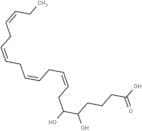
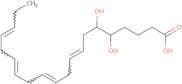
5,6-DiHETE, or 5,6-dihydroxy-eicosatetraenoic acid, is a bioactive lipid derived from arachidonic acid through the action of lipoxygenases. It is characterized by the presence of two hydroxyl groups at the 5 and 6 positions of the eicosatetraenoic acid backbone, which contributes to its biological activity. This compound is involved in various physiological processes, including inflammation and cell signaling. It is known to interact with specific receptors and can influence cellular responses, such as proliferation and apoptosis. The presence of multiple functional groups allows for diverse interactions with proteins and other biomolecules, making it significant in the study of lipid mediators in health and disease. Additionally, 5,6-DiHETE is of interest in pharmacological research due to its potential roles in modulating inflammatory responses and its implications in various pathological conditions. As with many lipid mediators, its stability and reactivity can be influenced by environmental factors, which is crucial for understanding its biological functions.
Formula:C20H32O4
Synonyms:- 5,6-DiHETE
- 5,6-dihydroxy-8(Z),11(Z),14(Z),17(Z)-eicosatetraenoic acid
- 5,6-DiHETE Exclusive
- VPXVODYVPILPRC-LTKCOYKYSA-N
Sort by
Purity (%)
0
100
|
0
|
50
|
90
|
95
|
100
Found 3 products.
(±)5(6)-DiHETE
CAS:Eicosapentaenoic acid is an ω-3 polyunsaturated fatty acid that is abundant in marine organisms and fish oils.Formula:C20H32O4Color and Shape:SolidMolecular weight:336.4725,6-dihydroxy-8(Z),11(Z),14(Z),17(Z)-eicosatetraenoic acid
CAS:Formula:C20H32O4Purity:>97%Color and Shape:In solution, EthanolMolecular weight:336.47(±)5(6)-DiHETE
CAS:(±)5(6)-DiHETE is an analog of the urine-derived metabolite 5-HETE, which has been shown to have potent anticancer properties. It functions as a kinase inhibitor, blocking the activity of kinases that are involved in cancer cell growth and survival. This compound has been extensively studied in Chinese hamster ovary cells and human tumor cell lines, where it has been shown to induce apoptosis (cell death) in cancer cells. Additionally, (±)5(6)-DiHETE has demonstrated medicinal potential as a protein kinase inhibitor, making it a promising candidate for the development of new anticancer drugs. Its ability to inhibit kinases may also make it useful in the treatment of other diseases that involve abnormal kinase activity.
Formula:C20H32O4Purity:Min. 95%Molecular weight:336.5 g/mol