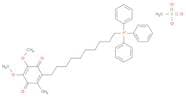
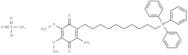
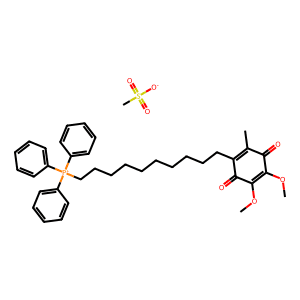
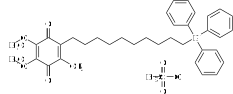
CAS 845959-50-4
:MitoQ
- Mitoquinone mesylate
- MitoQ10 mesylate
- Mitoquinone mesylate, ethanol solution
- Mitoquinone mesylate (Mitoquinone methanesulfonate
- Mitoquinol Mesylate
- MitoQ
- 10-(4,5-dimethoxy-2-methyl-3,6-dioxocyclohexa-1,4-dien-1-yl)decyl-triphenylphosphanium,methanesulfonate
- MitoQ mesylate
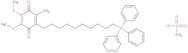
Mitoquinone mesylate
CAS:Mitoquinone mesylate (MitoQ10 mesylate) is a potent TRAP1 inhibitor (IC50=0.2 μM). Mitoquinone mesylate is an antioxidant. High-Quality, Low-Cost!Formula:C38H47O7PSPurity:98.36%Color and Shape:SolidMolecular weight:678.81Ref: TM-T12059L
1mg34.00€5mg74.00€1mL*10mM (DMSO)102.00€10mg105.00€25mg178.00€50mg268.00€100mg409.00€Mitoquinone mesylate
CAS:Mitoquinone mesylate (MQM) is a dinucleotide phosphate that is found in mitochondria and participates in mitochondrial functions. MQM has been shown to be involved in the regulation of oxidative injury and repair, as well as mitochondrial functions. MQM has antioxidant properties, which may be due to its ability to scavenge reactive oxygen species. In addition, it can also inhibit the activation of toll-like receptor 4 (TLR4), which modulates the production of cytokines. In a model system, MQM was able to reduce bowel disease by preventing the release of pro-inflammatory cytokines by inhibiting TLR4-mediated signaling pathways. This drug has been shown to promote cell growth by stimulating the production of growth factors such as erythropoietin and brain-derived neurotrophic factor (BDNF) from N2A cells.
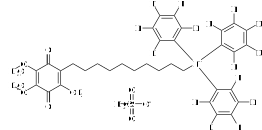
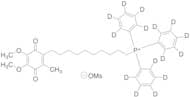
Formula:C38H47O7PSPurity:Min. 95%Color and Shape:Red PowderMolecular weight:678.82 g/molMitoquinone-d15 Mesylate
CAS:Controlled ProductFormula:C37D15H29O4P·CH3O3SColor and Shape:NeatMolecular weight:693.907Mitoquinone Mesylate
CAS:Controlled ProductStability Light Sensitive
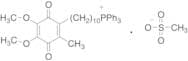
Applications Mitoquinone Mesylate is used in the transport and metabolism of some cationic ubiquinone antioxidants.
References Li, Y., et al.: Eur. J. Drug Metab. Pharmacokinet., 33, 199 (2008)Formula:C37H44O4P•CH3O3SColor and Shape:NeatMolecular weight:583.72951