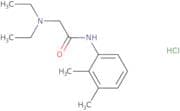
CAS 857170-72-0
:Sort by
Purity (%)
0
100
|
0
|
50
|
90
|
95
|
100
Found 6 products.
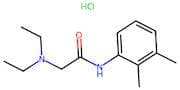
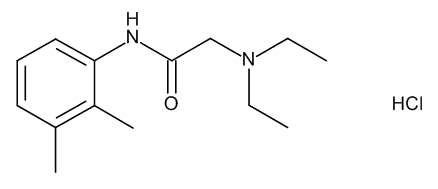
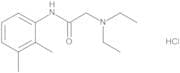
2-(Diethylamino)-N-(2,3-dimethylphenyl)acetamide hydrochloride (Lidocaine Impurity)
CAS:2-(Diethylamino)-N-(2,3-dimethylphenyl)acetamide hydrochloride (Lidocaine Impurity)Purity:97%Molecular weight:270.8g/molLidocaine EP Impurity F HCl
CAS:Formula:C14H22N2O·HClColor and Shape:White To Off-White SolidMolecular weight:234.34 36.462-(Diethylamino)-N-(2,3-dimethylphenyl)acetamide Hydrochloride
CAS:Controlled ProductImpurity Lidocaine EP impurity F
Applications 2-(Diethylamino)-N-(2,3-dimethylphenyl)acetamide is an impurity of lidocaine (L397800), an long-acting, membrane stabilizing agent against ventricular arrhythmia.
References Costa, J.C., et al.: Bioorg. Med. Chem. Lett., 18, 1162 (2008);Formula:C14H22N2O·ClHColor and Shape:NeatMolecular weight:270.802-(Diethylamino)-N-(2,3-dimethylphenyl)acetamide-d10 hydrochloride
CAS:Dichlorodiphenylphosphate, or DDP, is a pesticide that belongs to the group of organophosphate pesticides. It is an insecticide that is used in the control of mosquitoes, flies, and other pests. DDP has a high detection sensitivity and specificity for phosphate ions, which makes it ideal for use as a phosphate-sensitive reagent. The optimum condition for this reaction is at pH 8 with acetonitrile as the solvent. Dichlorodiphenylphosphate reacts with hydrogen phosphate ions to form phosphoric acid and dichlorophenylphosphate. This reaction can be optimized by removing impurities such as lidocaine or disodium hydrogen phosphate from the sample.Formula:C14H23ClN2OPurity:Min. 95%Molecular weight:270.8 g/mol