CAS 86-51-1
:2,3-Dimethoxybenzaldehyde
Description:
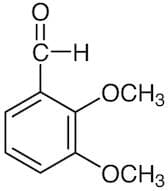
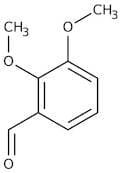
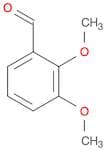
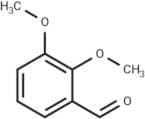
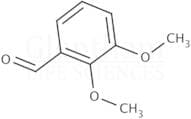
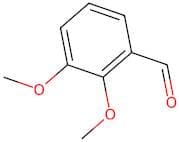
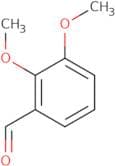
2,3-Dimethoxybenzaldehyde, with the CAS number 86-51-1, is an aromatic aldehyde characterized by the presence of two methoxy (-OCH₃) groups and an aldehyde (-CHO) functional group attached to a benzene ring. This compound typically appears as a colorless to pale yellow liquid with a sweet, floral odor. It is soluble in organic solvents such as ethanol and ether but has limited solubility in water due to its hydrophobic aromatic structure. The presence of the methoxy groups enhances its electron-donating properties, influencing its reactivity and making it a useful intermediate in organic synthesis, particularly in the production of various pharmaceuticals and fragrances. 2,3-Dimethoxybenzaldehyde can undergo typical reactions of aldehydes, including oxidation and condensation, and is often utilized in the synthesis of more complex organic molecules. Safety precautions should be observed when handling this compound, as it may cause irritation to the skin and eyes.
Formula:C9H10O3
InChI:InChI=1/C9H10O3/c1-11-8-5-3-4-7(6-10)9(8)12-2/h3-6H,1-2H3
InChI key:InChIKey=JIVGSHFYXPRRSZ-UHFFFAOYSA-N
SMILES:O(C)C1=C(C=O)C=CC=C1OC
Synonyms:- 3,5-Dihydroxypropiophenone
- 4-Diethoxybenzene
- 5,6-Dimethoxybenzaldehyde
- Benzaldehyde, 2,3-dimethoxy-
- NSC 403661
- NSC 51953
- NSC 6314
- O-Veratraldehyde
- 2,3-Dimethoxybenzaldehyde
- Orthoveratraldehyde
- 3,5-Dimethylsalicylic acid
- O-VERATRIC ALDEHYDE
- AKOS BBS-00003161
- 2,3-DIMETHOXYBENZALDEHYDE(3,5-DIMETHYLSALICYLICACID)
- 2,3-Dimethoxybenzaldehyde, 98+%
- LABOTEST-BB LT00932325
- 2,3-dlmethoxybenzaldehyde
- 2,3-Dimethoxybenzaldehyde 97%
- 2,3-Dimethoxybenzenecarbonal
- See more synonyms
Sort by
Purity (%)
0
100
|
0
|
50
|
90
|
95
|
100
Found 9 products.
2,3-Dimethoxybenzaldehyde
CAS:Formula:C9H10O3Purity:>98.0%(GC)Color and Shape:White to Light yellow powder to crystalMolecular weight:166.182,3-Dimethoxybenzaldehyde, 98+%
CAS:2,3-Dimethoxybenzaldehyde possess antifungal activity of redox-active benzaldehydes that target cellular antioxidation. It could function as chemosensitizing agents in concert with conventional drugs to improve antifungal efficacy. This Thermo Scientific Chemicals brand product was originally part oFormula:C9H10O3Purity:98+%Color and Shape:White to pale cream, Crystals or powder or crystalline powder or lumps or chunksMolecular weight:166.182,3-Dimethoxybenzaldehyde
CAS:Formula:C9H10O3Purity:97%Color and Shape:SolidMolecular weight:166.1739Ref: IN-DA003FJI
50kgTo inquire100kgTo inquire5g25.00€10g28.00€25g28.00€100g34.00€250g59.00€500g82.00€2,3-Dimethoxybenzaldehyde
CAS:2,3-Dimethoxybenzaldehyde, a benzoic acid analog, has potent antifungal properties (MIC=2.5 mM) and is used in berberine synthesis.Formula:C9H10O3Purity:99.70%Color and Shape:White To Brown Crystalline PowderMolecular weight:166.172,3-Dimethoxybenzaldehyde
CAS:2,3-Dimethoxybenzaldehyde is a chemical substance that binds to its ligands by hydrogen bonding and van der Waals forces. It is used in the synthesis of diethyl succinate. 2,3-Dimethoxybenzaldehyde has been shown to inhibit the growth of squamous carcinoma cells. The conversion of 2,3-dimethoxybenzaldehyde into benzoquinone is catalyzed by glucose oxidase and peroxidase. This oxidation process results in a loss of two electrons and one proton from the molecule, changing it from a phenol to an aromatic hydrocarbon.
Formula:C9H10O3Purity:Min. 95%Color and Shape:PowderMolecular weight:166.17 g/mol2,3-Dimethoxybenzaldehyde
CAS:Formula:C9H10O3Purity:97%Color and Shape:Solid, CrystallineMolecular weight:166.176