CAS 864167-45-3
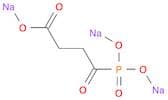
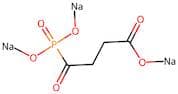
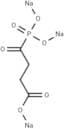
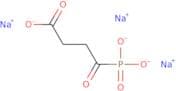
:Succinyl phosphonate trisodium salt
Description:
Succinyl phosphonate trisodium salt is a chemical compound characterized by its unique structure, which includes succinic acid and phosphonate functional groups. This compound typically appears as a white to off-white crystalline powder and is soluble in water, making it suitable for various applications in biochemical and pharmaceutical contexts. Its trisodium salt form indicates that it contains three sodium ions, which enhance its solubility and stability in aqueous solutions. The presence of phosphonate groups imparts potential utility in chelation and as a phosphorous source in various chemical reactions. Additionally, succinyl phosphonate trisodium salt may exhibit properties such as low toxicity and biodegradability, making it an attractive candidate for environmentally friendly applications. Its specific reactivity and interactions can vary based on the surrounding conditions, including pH and temperature, which are crucial for its use in research and industrial applications. Overall, this compound represents a versatile tool in the fields of organic synthesis and biochemistry.
Formula:C4H8NaO6P
Synonyms:- Succinyl phosphonate trisodium salt
Sort by
Purity (%)
0
100
|
0
|
50
|
90
|
95
|
100
Found 4 products.
Succinyl phosphonate trisodium salt
CAS:Succinyl phosphonate trisodium saltPurity:≥95%Molecular weight:248.01g/molSuccinyl phosphonate trisodium salt
CAS:Succinyl phosphonate trisodium salt is an inhibitor of α-ketoglutarate dehydrogenase (KGDHC)Formula:C4H4Na3O6PPurity:99.8% - ≥95%Color and Shape:SolidMolecular weight:248.01Succinyl phosphonate trisodium
CAS:Succinyl phosphonate trisodium is a research tool that is used to study the function of ion channels. It has been shown to activate voltage-gated potassium channels and inhibit calcium-activated potassium channels. Succinyl phosphonate trisodium may also be a ligand for the nuclear receptor LXR, which regulates cholesterol metabolism. Succinyl phosphonate trisodium binds to the extracellular domain of many cell surface receptors, including those for insulin, epidermal growth factor, and fibroblast growth factor. This compound inhibits antibody production by inhibiting protein synthesis in cells.br>br>Formula:C4H4Na3O6PPurity:Min. 95%Molecular weight:248.01 g/mol