CAS 86443-51-8
:2-chloro-N-ethylpyrimidin-4-amine
Description:
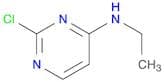
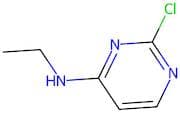
2-Chloro-N-ethylpyrimidin-4-amine is a chemical compound characterized by its pyrimidine ring structure, which is a six-membered aromatic heterocycle containing two nitrogen atoms at positions 1 and 3. The presence of a chloro group at the 2-position and an ethyl amine substituent at the 4-position contributes to its unique reactivity and properties. This compound is typically a solid at room temperature and may exhibit moderate solubility in polar organic solvents. It is often used in pharmaceutical research and development due to its potential biological activity, particularly in the field of medicinal chemistry. The chloro substituent can participate in nucleophilic substitution reactions, while the amine group can engage in hydrogen bonding, influencing its interaction with biological targets. Safety data sheets should be consulted for handling and toxicity information, as compounds with halogenated groups can pose environmental and health risks. Overall, 2-chloro-N-ethylpyrimidin-4-amine serves as a valuable intermediate in the synthesis of various bioactive molecules.
Formula:C6H8ClN3
InChI:InChI=1/C6H8ClN3/c1-2-8-5-3-4-9-6(7)10-5/h3-4H,2H2,1H3,(H,8,9,10)
SMILES:CCN=c1ccnc(Cl)[nH]1
Sort by
Purity (%)
0
100
|
0
|
50
|
90
|
95
|
100
Found 4 products.
2-Chloro-N-ethylpyrimidin-4-amine
CAS:Formula:C6H8ClN3Purity:98%Color and Shape:SolidMolecular weight:157.60082-Chloro-N-ethylpyrimidin-4-amine
CAS:2-Chloro-N-ethylpyrimidin-4-aminePurity:98%Molecular weight:157.60g/mol(2-Chloro-pyrimidin-4-yl)-ethyl-amine
CAS:Formula:C6H8ClN3Purity:98%Color and Shape:SolidMolecular weight:157.62-Chloro-N-ethylpyrimidin-4-amine
CAS:2-Chloro-N-ethylpyrimidin-4-amine is a class I inhibitor of the cytochrome P450 that has been shown to inhibit the kinase activity of a number of protein tyrosine phosphatases. The inhibition of these enzymes results in an increase in cellular activities such as transcription and translation. 2-Chloro-N-ethylpyrimidin-4-amine has also been shown to have cytotoxic effects on cultured cells and is able to bind to hydrophobic regions on proteins, which may account for its ability to induce apoptosis.Formula:C6H8ClN3Purity:Min. 95%Molecular weight:157.6 g/mol