CAS 864814-88-0
:Resminostat
Description:
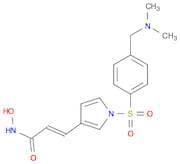
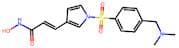
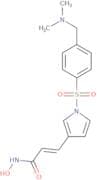
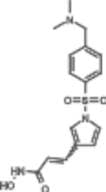
Resminostat, with the CAS number 864814-88-0, is a small molecule that functions primarily as a histone deacetylase (HDAC) inhibitor. It is characterized by its ability to modulate gene expression by altering the acetylation status of histones, thereby influencing chromatin structure and function. This compound has shown potential in the treatment of various cancers, particularly in hematological malignancies and solid tumors, by promoting apoptosis and inhibiting cell proliferation. Resminostat is typically administered orally and has been investigated in clinical trials for its efficacy and safety profile. Its mechanism of action involves the reactivation of tumor suppressor genes and the downregulation of oncogenes, making it a candidate for combination therapies. Additionally, resminostat has been noted for its relatively favorable pharmacokinetic properties, although its specific interactions and side effects can vary based on individual patient factors and the context of use. Overall, resminostat represents a promising avenue in cancer therapeutics, particularly in the realm of epigenetic modulation.
Formula:C16H19N3O4S
InChI:InChI=1S/C16H19N3O4S/c1-18(2)11-13-3-6-15(7-4-13)24(22,23)19-10-9-14(12-19)5-8-16(20)17-21/h3-10,12,21H,11H2,1-2H3,(H,17,20)/b8-5+
InChI key:InChIKey=FECGNJPYVFEKOD-VMPITWQZSA-N
SMILES:S(=O)(=O)(N1C=C(/C=C/C(NO)=O)C=C1)C2=CC=C(CN(C)C)C=C2
Synonyms:- (E)-3-[1-[[4-[(Dimethylamino)methyl]benzene]sulfonyl]-1H-pyrrol-3-yl]-N-hydroxyacrylamide
- 4SC 201
- (2E)-3-[1-[[4-[(Dimethylamino)methyl]phenyl]sulfonyl]-1H-pyrrol-3-yl]-N-hydroxy-2-propenamide
- Resminostat
- 2-Propenamide, 3-[1-[[4-[(dimethylamino)methyl]phenyl]sulfonyl]-1H-pyrrol-3-yl]-N-hydroxy-, (2E)-
Sort by
Purity (%)
0
100
|
0
|
50
|
90
|
95
|
100
Found 4 products.
Resminostat
CAS:Resminostat is a small molecule that inhibits the transcriptional co-activator, pd-l1. It has been shown to be very effective at reducing the growth of squamous cell carcinoma cells in vitro and in vivo. Resminostat also reduces liver fat content and steatosis by inhibiting fatty acid synthesis. Resminostat has been shown to induce apoptosis in cancer cells through inhibition of nuclear DNA replication, which leads to decreased production of proteins required for cell division. This drug has not been tested on humans but is being investigated as a potential treatment for hepatic steatosis, a condition characterized by excess fat accumulation in the liver.Formula:C16H19N3O4SPurity:Min. 95%Molecular weight:349.41 g/molResminostat
CAS:Resminostat (4SC-201) is an orally bioavailable inhibitor of histone deacetylases (HDACs) with potential antineoplastic activity.Formula:C16H19N3O4SPurity:99.46%Color and Shape:SolidMolecular weight:349.4