CAS 86556-09-4
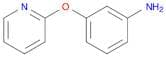
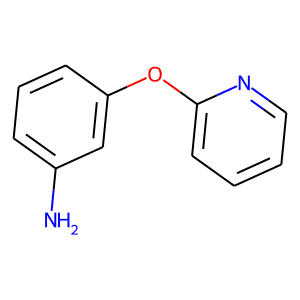
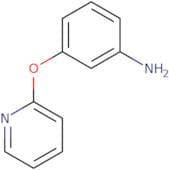
:3-(pyridin-2-yloxy)aniline
Description:
3-(Pyridin-2-yloxy)aniline, with the CAS number 86556-09-4, is an organic compound characterized by the presence of both an aniline and a pyridine moiety. This compound features a pyridine ring substituted with a phenolic ether linkage to an aniline group, which contributes to its unique chemical properties. It typically appears as a solid at room temperature and may exhibit moderate solubility in polar organic solvents due to the presence of the amino and ether functional groups. The compound is likely to participate in various chemical reactions, including electrophilic aromatic substitution and nucleophilic reactions, owing to the reactivity of the aniline nitrogen and the electron-rich nature of the aromatic rings. Additionally, it may exhibit biological activity, making it of interest in pharmaceutical research. Safety data should be consulted for handling and storage, as with any chemical substance, to ensure proper safety protocols are followed.
Formula:C11H10N2O
InChI:InChI=1/C11H10N2O/c12-9-4-3-5-10(8-9)14-11-6-1-2-7-13-11/h1-8H,12H2
SMILES:c1ccnc(c1)Oc1cccc(c1)N
Synonyms:- Benzenamine, 3-(2-pyridinyloxy)-
Sort by
Purity (%)
0
100
|
0
|
50
|
90
|
95
|
100
Found 3 products.
3-(Pyridin-2-yloxy)aniline
CAS:Formula:C11H10N2OPurity:95%Color and Shape:SolidMolecular weight:186.20993-(Pyridin-2-yloxy)aniline
CAS:3-(Pyridin-2-yloxy)anilineFormula:C11H10N2OPurity:97%Color and Shape: brown solidMolecular weight:186.21g/mol3-(Pyridin-2-yloxy)aniline
CAS:3-(Pyridin-2-yloxy)aniline is a synthetic compound that is used as a potent inhibitor of the enzyme tyrosine hydroxylase. This enzyme catalyzes the conversion of tyrosine to L-3,4-dihydroxyphenylalanine and plays a key role in the synthesis of dopamine. 3-(Pyridin-2-yloxy)aniline has been shown to be effective in treating Parkinson's disease and other disorders that involve neuronal degeneration and cell death. This drug inhibits the production of dopamine by binding to tyrosine hydroxylase, thereby preventing it from converting tyrosine into L-3,4-dihydroxyphenylalanine. The compound also has significant inhibitory activity against cyclin dependent kinases (CDKs), which are enzymes that regulate the activity of protein kinases.
Formula:C11H10N2OPurity:Min. 95%Molecular weight:186.21 g/mol