CAS 86571-25-7
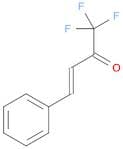
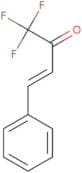
:trans-1,1,1-trifluoro-4-phenyl-3-buten-2-one
Description:
Trans-1,1,1-trifluoro-4-phenyl-3-buten-2-one is an organic compound characterized by its unique structure, which includes a trifluoromethyl group and a phenyl group attached to a butenone backbone. This compound typically exhibits a high degree of polarity due to the presence of fluorine atoms, which can influence its reactivity and interactions with other substances. The trans configuration of the double bond in the butenone moiety contributes to its geometric stability and can affect its physical properties, such as boiling and melting points. Additionally, the presence of the phenyl group can enhance its aromatic characteristics, potentially influencing its solubility in organic solvents. This compound may be of interest in various fields, including pharmaceuticals and materials science, due to its potential applications in synthesis and as a building block for more complex molecules. Safety data should be consulted for handling and storage, as fluorinated compounds can exhibit unique toxicological profiles.
Sort by
Purity (%)
0
100
|
0
|
50
|
90
|
95
|
100
Found 3 products.
1,1,1-Trifluoro-4-phenylbut-3-en-2-one
CAS:Formula:C10H7F3OPurity:%Color and Shape:LiquidMolecular weight:200.15721,1,1-Trifluoro-4-phenylbut-3-en-2-one
CAS:Formula:C10H7F3OPurity:95+%Color and Shape:LiquidMolecular weight:200.161,1,1-Trifluoro-4-phenylbut-3-en-2-one
CAS:Trifluoromethanesulfonic acid is a superacidic acid that has been used in organic synthesis. It has been shown to be reactive with electron-deficient molecules such as methyl cinnamate, which can lead to the formation of anions and carbanions. Trifluoromethanesulfonic acid is also able to protonate carbonyls, which makes it useful for the synthesis of functionalized carbonyls. Trifluoromethanesulfonic acid is hydrophobic and reacts with membranes, making it useful for protein extraction. It also reacts with s. typhimurium, a bacterium that causes food poisoning.Formula:C10H7F3OPurity:Min. 95%Molecular weight:200.16 g/mol