CAS 866-82-0
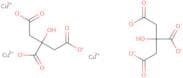
:Cupric citrate
Description:
Cupric citrate, with the CAS number 866-82-0, is a chemical compound formed from copper and citric acid. It typically appears as a blue-green solid, reflecting the characteristic color of copper compounds. This substance is known for its solubility in water, which allows it to be utilized in various applications, including as a dietary supplement and in some industrial processes. Cupric citrate serves as a source of copper, an essential trace element necessary for various biological functions, including enzyme activity and the formation of red blood cells. In addition to its nutritional applications, cupric citrate can also be employed in analytical chemistry as a reagent. Its stability and relatively low toxicity make it a suitable candidate for use in food and pharmaceutical products. However, like all copper compounds, it should be handled with care to avoid excessive exposure, which can lead to toxicity. Overall, cupric citrate is a versatile compound with both nutritional and industrial significance.
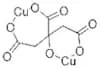
Formula:C6H8O7·2Cu
InChI:InChI=1S/C6H8O7.2Cu/c7-3(8)1-6(13,5(11)12)2-4(9)10;;/h13H,1-2H2,(H,7,8)(H,9,10)(H,11,12);;
InChI key:InChIKey=OUJQALUYGBUJBS-UHFFFAOYSA-N
SMILES:C(CC(O)=O)(CC(O)=O)(C(O)=O)O.[Cu]
Synonyms:- 1,2,3-Propanetricarboxylic Acid, 2-Hydroxy-, Copper(2+) Salt (1:2)
- Citric acid, copper(2+) salt (1:2)
- Copper-(II)-citrate Dihydrate
- Cupric citrate
- Cuprocitrol
- Dicopper citrate
Sort by
Purity (%)
0
100
|
0
|
50
|
90
|
95
|
100
Found 1 products.
Copper citrate
CAS:Copper citrate is a metal chelate that has been used for many purposes. It can be used as an antimicrobial agent, in wastewater treatment, and as a diagnostic tool. The structure of this compound is composed of citric acid, copper ions, and sodium ions. Copper citrate has been shown to inhibit the growth of bacteria. This product is used in the diagnosis of urinary tract infections by binding to copper ions in urine and forming a blue-green color. The structural analysis of the metal chelate was shown using X-ray crystallography with wild-type strains of Escherichia coli and Klebsiella pneumoniae.
Formula:C6H4Cu2O7Purity:Min. 95%Color and Shape:PowderMolecular weight:315.18 g/molRef: 3D-AAA86682
Discontinued product