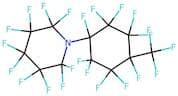
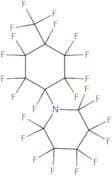
![1-[1,2,2,3,3,4,5,5,6,6-Decafluoro-4-(trifluoromethyl)cyclohexyl]-2,2,3,3,4,4,5,5,6,6-decafluoropip…](/_next/image/?url=https%3A%2Fstatic.cymitquimica.com%2Fcas-image%2Fthumb-webp%2F388402-methylcyclohexyl-piperidine-perfluoride.webp&w=3840&q=75)
CAS 86630-50-4
:1-[1,2,2,3,3,4,5,5,6,6-Decafluoro-4-(trifluoromethyl)cyclohexyl]-2,2,3,3,4,4,5,5,6,6-decafluoropiperidine
- Perfluoro-N-(4-methylcyclohexyl)piperidine
- Perfluoro-N-(4-methylcylclohexyl)piperidine
- Piperidine, 1-(1,2,2,3,3,4,5,5,6,6-decafluoro-4-(trifluoromethyl)cyclohexyl)-2,2,3,3,4,4,5,5,6,6-decafluoro-
- 1-[1,2,2,3,3,4,5,5,6,6-Decafluoro-4-(trifluoromethyl)cyclohexyl]-2,2,3,3,4,4,5,5,6,6-decafluoropiperidine
- Perfluoro-N-(4-methylcyclohexyl)piperidine (isomeric mixture), technical grade
- methylcyclohexyl piperidine perfluoride
- Perfluoro-N-(4-methylcyclohexyl) piperidine (isomeric mixture)
Perfluoro-N-(4-methylcyclohexyl)piperidine
CAS:Perfluoro-N-(4-methylcyclohexyl)piperidineFormula:C12F23NPurity:techColor and Shape: clear liquidMolecular weight:595.10g/molPerfluoro-N-(4-methylcyclohexyl)piperidine
CAS:Controlled ProductPerfluoro-N-(4-methylcyclohexyl)piperidine (4-FPP) is a fluorine compound that has been shown to inhibit the enzymatic activity of tyrosine kinases. It is a potent inhibitor of both human and murine tyrosine kinases, but it does not bind to bacterial tyrosine kinase domains. 4-FPP has been used in clinical studies as an anti-cancer drug, although it's clinical relevance remains unclear. It has also been shown to be effective against the influenza virus by inhibiting the synthesis of viral proteins that are involved in replication. The chemical structure of 4-FPP contains a carbonyl group that can react with other compounds through a photochemical process. This reaction is thought to result in the development of new drugs with similar biochemical properties to 4-FPP.
Formula:C12F23NPurity:Min. 95%Color and Shape:Clear LiquidMolecular weight:595.1 g/mol