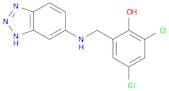
CAS 866927-10-8
:IC87201
Description:
IC87201, with the CAS number 866927-10-8, is a chemical compound that has garnered attention in the field of medicinal chemistry, particularly for its potential therapeutic applications. It is classified as a small molecule inhibitor, specifically targeting certain protein kinases, which play crucial roles in various cellular processes, including cell growth and division. The compound is characterized by its specific molecular structure, which includes functional groups that enhance its binding affinity to target proteins. IC87201 has been studied for its efficacy in inhibiting tumor growth in various cancer models, making it a candidate for further development in cancer therapy. Additionally, its pharmacokinetic properties, such as solubility and stability, are essential for determining its suitability for clinical use. As with many investigational compounds, ongoing research is necessary to fully understand its mechanism of action, potential side effects, and overall therapeutic profile.
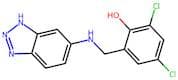
Formula:C13H10Cl2N4O
Synonyms:- (IC87201
- Phenol, 2-[(1H-benzotriazol-6-ylamino)methyl]-4,6-dichloro-
- 2-[(1H-Benzotriazol-6-ylamino)methyl]-4,6-dichlorophenol
- IC87201
- IC-87201
- IC87201 >=98% (HPLC)
Sort by
Purity (%)
0
100
|
0
|
50
|
90
|
95
|
100
Found 4 products.
IC87201
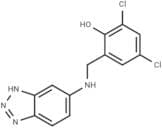
CAS:IC87201 is a nNOS-PDZ/PSD-95-PDZ inhibitor. IC87201 showed great promise in cellular experiments and animal models of ischemic stroke and pain.Formula:C13H10Cl2N4OPurity:97.44%Color and Shape:SolidMolecular weight:309.15IC87201
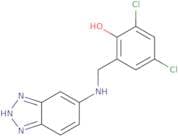
CAS:IC87201 is a small molecule that has been shown to have inhibitory properties against the growth factor receptor. It also has neurotrophic effects and may be useful for treating degenerative diseases, such as Parkinson's disease. IC87201 inhibits mitochondrial membrane potential by binding to the ATP synthase beta subunit and prevents ATP synthesis. This inhibition leads to an increase in the concentration of reactive oxygen species and oxidative stress. IC87201 also increases locomotor activity in mice, which suggests it may be useful for treating disorders that involve locomotor dysfunction such as Parkinson's disease.Formula:C13H10Cl2N4OPurity:Min. 95%Molecular weight:309.15 g/mol