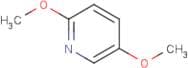
CAS 867267-24-1
:2,5-dimethoxy pyridine
Description:
2,5-Dimethoxypyridine is an organic compound characterized by a pyridine ring substituted with two methoxy groups at the 2 and 5 positions. Its molecular formula is C8H9NO2, indicating the presence of carbon, hydrogen, nitrogen, and oxygen atoms. This compound typically appears as a colorless to pale yellow liquid or solid, depending on its purity and temperature. It is known for its aromatic properties, which contribute to its potential applications in organic synthesis and as a building block in the development of pharmaceuticals and agrochemicals. The presence of methoxy groups enhances its solubility in organic solvents and may influence its reactivity and interaction with biological systems. 2,5-Dimethoxypyridine can participate in various chemical reactions, including nucleophilic substitutions and electrophilic aromatic substitutions, making it a versatile intermediate in synthetic chemistry. Additionally, it may exhibit biological activity, although specific pharmacological properties would require further investigation. Proper handling and storage are essential due to its chemical nature, and safety data sheets should be consulted for detailed safety information.
- 2,5-Dimethoxypyridine
Sort by
Purity (%)
0
100
|
0
|
50
|
90
|
95
|
100
Found 4 products.
2,5-Dimethoxypyridine
CAS:2,5-DimethoxypyridineFormula:C7H9NO2Purity:97%Color and Shape: pale yellow liquidMolecular weight:139.15g/mol2,5-Dimethoxypyridine
CAS:2,5-Dimethoxypyridine is a chemical compound that has been used as a medicinal drug. It is an intermediate in the synthesis of other compounds such as acetonitrile and 6-azaindole. It can be synthesized by the reaction of formaldehyde with pyridine. The tautomeric forms of 2,5-dimethoxypyridine are also known to exist. The functionalised form of this molecule has been shown to have diffraction properties and solvents such as acetonitrile can be used to generate it. Oxidations with hydrogen peroxide or potassium permanganate have been shown to give regioselectivity for the pyridine ring. Demethylation reactions with sodium methoxide, methanol, or hydrazine are another way to produce 2,5-dimethoxypyridineFormula:C7H9NO2Purity:Min. 95%Molecular weight:139.15 g/mol