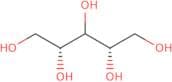
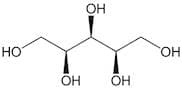
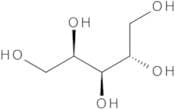
CAS 87-99-0
:Xylitol
Description:
Xylitol, with the CAS number 87-99-0, is a sugar alcohol (polyol) commonly used as a sweetener. It is a white, crystalline solid that is soluble in water and has a sweetness comparable to that of sucrose, but with fewer calories. Xylitol is naturally found in small amounts in various fruits and vegetables, as well as in the bark of birch trees, which is where it was first extracted. It has a low glycemic index, making it a popular choice for diabetic-friendly products. Additionally, xylitol is known for its dental health benefits, as it can inhibit the growth of cavity-causing bacteria in the mouth. Its chemical formula is C5H12O5, and it has a molecular weight of approximately 152.15 g/mol. Xylitol is generally recognized as safe (GRAS) by food safety authorities, although it can cause gastrointestinal discomfort in some individuals when consumed in large amounts. It is widely used in sugar-free gum, candies, and oral care products.
Formula:C5H12O5
InChI:InChI=1S/C5H12O5/c6-1-3(8)5(10)4(9)2-7/h3-10H,1-2H2
InChI key:InChIKey=HEBKCHPVOIAQTA-UHFFFAOYSA-N
SMILES:C(C(CO)O)(C(CO)O)O
Synonyms:- 1,2,3,4,5-Pentahydroxypentane
- <span class="text-smallcaps">D</smallcap><smallcap>L</span>-Xylitol
- C-Xylidex CR 16055
- D-Xylitol
- DL-Xylitol
- Eutrit
- Fluorette
- Klinit
- Kylit
- Nsc 25283
- Wood sugar alcohol
- X 0018
- Xilitol
- Xivia CM 90
- Xylisorb
- Xylisorb 300
- Xylisorb 700
- Xylit
- Xylit XC
- Xylitab 100
- Xylitab 300
- Xylitab DC
- Xylite
- Xylite (sugar)
- Xylite P
- Xylitol C
- Xylitol CM 90
- Xylitol P
- Xyliton
- meso-Xylitol
- xylo-Pentitol
- See more synonyms
Sort by
Purity (%)
0
100
|
0
|
50
|
90
|
95
|
100
Xylitol
CAS:<p>Xylitol is a sugar alcohol that has been shown to have antimicrobial properties. It is also used as a sweetener in chewing gum and toothpaste. Xylitol inhibits the growth of bacteria by binding to the enzyme adenosine triphosphate (ATP) synthase, which is required for energy metabolism. The binding of xylitol to ATP synthase prevents the formation of ATP and blocks bacterial growth, leading to cell death. Xylitol can be produced from xylose, a sugar found in plants and animals, through biochemical reactions that are catalyzed by enzymes such as xylitol dehydrogenase and xylulokinase. This process is anaerobic and does not require oxygen or organic nutrients. Xylitol has been shown to have physiological effects on wild-type strain bacteria such as Aerobacter aerogenes.</p>Formula:C5H12O5Purity:Min. 95%Color and Shape:White PowderMolecular weight:152.15 g/molXylitol extrapure
CAS:Formula:C5H12O5Color and Shape:White, Crystalline powder, ClearMolecular weight:152.15