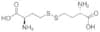
CAS 870-93-9
:DL-Homocystine
Description:
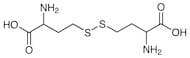
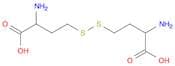
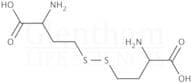
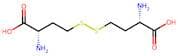
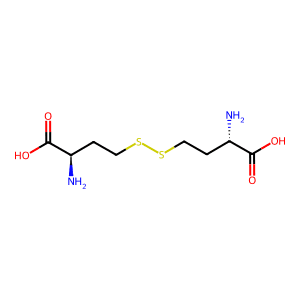
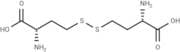
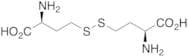
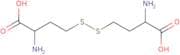
DL-Homocystine is a sulfur-containing amino acid derivative, specifically a dimer of homocysteine, which is formed by the oxidation of two homocysteine molecules. It is classified as a non-proteinogenic amino acid and is characterized by the presence of two thiol groups, which can form disulfide bonds, contributing to its reactivity and biological significance. The chemical formula for DL-homocystine is C6H12N2O4S2, and it has a molecular weight that reflects its complex structure. This compound is often studied in the context of metabolic disorders, particularly those related to sulfur amino acid metabolism, and has implications in cardiovascular health due to its association with homocysteine levels in the body. DL-homocystine is typically found in a crystalline form and is soluble in water, making it suitable for various biochemical applications. Its role in biological systems and potential therapeutic applications continue to be areas of research interest, particularly in understanding its impact on health and disease.
Formula:C8H16N2O4S2
InChI:InChI=1/C8H16N2O4S2/c9-5(7(11)12)1-3-15-16-4-2-6(10)8(13)14/h5-6H,1-4,9-10H2,(H,11,12)(H,13,14)/t5-,6-/s2
InChI key:InChIKey=ZTVZLYBCZNMWCF-IOMOGOHMNA-N
SMILES:C([C@@H](C(O)=O)N)CSSCC[C@@H](C(O)=O)N
Synonyms:- <span class="text-smallcaps">DL</span>-4,4′-Dithiobis(2-aminobutyric acid)
- <span class="text-smallcaps">DL</span>-Homocystine
- Butanoic acid, 4,4′-dithiobis[2-amino-, (2R,2′R)-rel-
- Butanoic acid, 4,4′-dithiobis[2-amino-, (R*,R*)-(±)-
- Butyric acid, 4,4′-dithiobis[2-amino-, <span class="text-smallcaps">DL</span>-
- Dl-Homocystine Crystalline
- Homocystine
- NSC 226570
- rel-(2R,2′R)-4,4′-Dithiobis[2-aminobutanoic acid]
- DL-Homocystine
- Butyric acid, 4,4′-dithiobis[2-amino-, DL-
Sort by
Purity (%)
0
100
|
0
|
50
|
90
|
95
|
100
Found 9 products.
DL-Homocystine
CAS:Formula:C8H16N2O4S2Purity:>98.0%(T)Color and Shape:White to Light yellow powder to crystalMolecular weight:268.35DL-Homocystine
CAS:DL-Homocystine is a mutagen secreted by F. nucleatum.Formula:C8H16N2O4S2Purity:99.77%Color and Shape:SolidMolecular weight:268.35DL-Homocystine
CAS:Controlled ProductApplications DL-Homocystine is used in the synthesis of potential antitumor agents through inhibition of L-asparagine. There is growing clinical evidence that elevated homocysteine levels are associated with an increased risk of venous and arterial thrombosis.
References Brynes, S. et al.: J. Pharm. Sci., 67, 1550 (1978); Lauricella, A. et al.: Thromb. Res., 107, 75 (2002);Formula:C8H16N2O4S2Color and Shape:White To Off-WhiteMolecular weight:268.35DL-Homocystine
CAS:DL-Homocystine is a product of the metabolic pathway where homocysteine is converted to methionine. This process requires the oxidation of homocystine by hydrogen tartrate, which is catalyzed by the enzyme homocysteine oxidase. DL-Homocystine has been shown to inhibit proliferation of human hepatic cells and endothelial cells in culture. It also inhibits the development of atherosclerotic lesions in mice and can be used as a fluorescent probe for detecting lipid peroxidation in biological samples. DL-Homocystine plays an important role in the treatment of patients with atherosclerosis and hyperhomocysteinemia.Formula:C8H16N2O4S2Purity:Min. 95%Color and Shape:PowderMolecular weight:268.36 g/mol