CAS 877-11-2
:2,3,4,5,6-Pentachlorotoluene
Description:
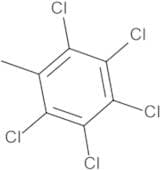
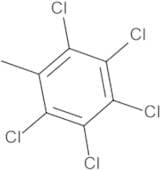
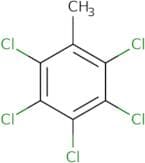
2,3,4,5,6-Pentachlorotoluene is a chlorinated aromatic compound characterized by the presence of five chlorine atoms attached to a toluene backbone. Its molecular structure consists of a methyl group (–CH₃) bonded to a benzene ring that has chlorine substituents at the 2, 3, 4, 5, and 6 positions. This compound is typically a colorless to pale yellow solid and is known for its stability and resistance to degradation. It is insoluble in water but soluble in organic solvents, which makes it useful in various industrial applications, including as an intermediate in chemical synthesis. Due to its chlorinated nature, 2,3,4,5,6-pentachlorotoluene may exhibit toxicological effects and environmental persistence, raising concerns regarding its potential impact on human health and ecosystems. Proper handling and disposal measures are essential to mitigate risks associated with exposure to this compound.
Formula:C7H3Cl5
InChI:InChI=1/C7H3Cl5/c1-2-3(8)5(10)7(12)6(11)4(2)9/h1H3
InChI key:InChIKey=AVSIMRGRHWKCAY-UHFFFAOYSA-N
SMILES:CC1=C(Cl)C(Cl)=C(Cl)C(Cl)=C1Cl
Synonyms:- 2,3,4,5,6-Pentachlorotoluene
- Benzene, 1,2,3,4,5-Pentachloro-6-Methyl-
- Benzene, pentachloromethyl-
- Methylpentachlorobenzene
- NSC 16046
- Toluene, 2,3,4,5,6-pentachloro-
- 1,2,3,4,5-Pentachloro-6-methylbenzene
Sort by
Purity (%)
0
100
|
0
|
50
|
90
|
95
|
100
Found 3 products.
2,3,4,5,6-Pentachlorotoluene 10 µg/mL in Cyclohexane
CAS:Formula:C7H3Cl5Color and Shape:Single SolutionMolecular weight:264.362,3,4,5,6-Pentachlorotoluene
CAS:Applications 2,3,4,5,6-Pentachlorotoluene is used in prediction of daphnid survival after in situ exposure to complex mixtures. Also, this compound is very toxic.
References Baas, J., et al.: Environmental Science & Technology, 43, 6064-6069 (2009);Formula:C7H3Cl5Color and Shape:Off-White To Light RedMolecular weight:264.361,2,3,4,5-Pentachloro-6-methylbenzene
CAS:Pentachloro-6-methylbenzene is a chlorinated aromatic hydrocarbon that is used as an organic solvent. The chemical has been shown to be mutagenic, carcinogenic, and teratogenic in CD-1 mice. It also has the ability to cause light emission, which can be used for chemiluminescence or mechanoluminescence. Pentachloro-6-methylbenzene also reacts with magnesium oxide and fluorine to form 1,2,3,4,5-pentachloro-6-(4'-fluorophenyl)benzene (PCB), which is a highly chlorinated derivative of PCBM that can be used in organic light emitting diodes.Formula:C7H3Cl5Purity:Min. 95%Color and Shape:PowderMolecular weight:264.4 g/mol