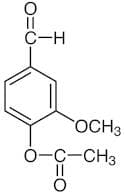
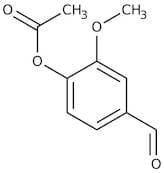
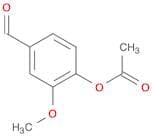
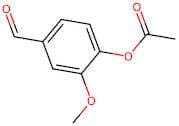
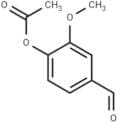
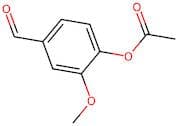
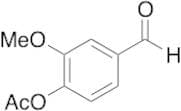
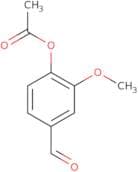
CAS 881-68-5
:Acetovanillin
Description:
Acetovanillin, also known as 4-hydroxy-3-methoxyacetophenone, is an organic compound with the CAS number 881-68-5. It is a derivative of vanillin, characterized by the presence of an acetyl group attached to the phenolic structure. Acetovanillin typically appears as a white to pale yellow crystalline solid with a sweet, vanilla-like aroma, making it valuable in the food and fragrance industries. It is soluble in organic solvents such as ethanol and ether but has limited solubility in water. The compound exhibits antioxidant properties and has been studied for its potential health benefits, including anti-inflammatory and antimicrobial effects. Acetovanillin is often used as a flavoring agent in food products and as a fragrance component in cosmetics and perfumes. Its chemical structure includes a methoxy group and a hydroxyl group, contributing to its reactivity and interactions in various chemical processes. Overall, acetovanillin is a versatile compound with applications in both culinary and industrial contexts.
Formula:C10H10O4
InChI:InChI=1/C10H10O4/c1-6(12)9-7(5-11)3-4-8(13)10(9)14-2/h3-5,13H,1-2H3
InChI key:InChIKey=PZSJOBKRSVRODF-UHFFFAOYSA-N
SMILES:O(C(C)=O)C1=C(OC)C=C(C=O)C=C1
Synonyms:- 4-(Acetyloxy)-3-methoxybenzaldehyde
- 4-Acetoxy-3-methoxybenzaidehyde
- 4-Acetoxy-3-methoxybenzaldehyde
- 4-Acetoxy-5-methoxybenzaldehyde
- 4-Formyl-2-Methoxyphenyl Acetate
- 4-Formyl-2-methoxyphenol acetate
- 4-O-Acetylvanillin
- Acetovanillin
- Acetylvanillin
- Benzaldehyde, 4-(acetyloxy)-3-methoxy-
- NSC 25863
- NSC 8499
- Vanillin acetate
- o-Acetylvanillin
- 3-METHOXY-4-ACETOXYBENZALDEHYDE
- 4-ACETYLVANILLIN
- AKOS 239-07
- AKOS B004358
- Benzaldehyde, 4-acetoxy-3-methoxy
- AKOS BBS-00003243
- FEMA 3108
- 4-(acetyloxy)-3-methoxy-benzaldehyd
- ACETYL VANILLIN
- See more synonyms
Sort by
Purity (%)
0
100
|
0
|
50
|
90
|
95
|
100
Found 9 products.
Vanillin Acetate
CAS:Formula:C10H10O4Purity:>98.0%(GC)Color and Shape:White to Almost white powder to crystalMolecular weight:194.194-Acetoxy-3-methoxybenzaldehyde, 98%
CAS:This Thermo Scientific Chemicals brand product was originally part of the Alfa Aesar product portfolio. Some documentation and label information may refer to the legacy brand. The original Alfa Aesar product / item code or SKU reference has not changed as a part of the brand transition to Thermo SciFormula:C10H10O4Purity:98%Color and Shape:White to cream, Crystals or powder or crystalline powderMolecular weight:194.194-Formyl-2-methoxyphenyl acetate
CAS:Formula:C10H10O4Purity:97%Color and Shape:SolidMolecular weight:194.1840Vanillin acetate
CAS:Acetylvanillin is a derivative of Vanillin, the primary component found in vanilla bean extract.Formula:C10H10O4Purity:98.71%Color and Shape:SolidMolecular weight:194.184-Acetoxy-3-methoxybenzaldehyde
CAS:4-Acetoxy-3-methoxybenzaldehydeFormula:C10H10O4Purity:≥95%Color and Shape: white to off white crystalline solidMolecular weight:194.18g/mol4-Acetoxy-3-methoxybenzaldehyde
CAS:4-Acetoxy-3-methoxybenzaldehyde is an antimicrobial agent that is used specifically for the treatment of lemongrass oil and eugenol. It has been shown to be effective against a wide range of microorganisms, such as Escherichia coli, Pseudomonas aeruginosa, Salmonella enterica, Staphylococcus aureus, and Streptococcus pneumoniae. 4-Acetoxy-3-methoxybenzaldehyde has been shown to inhibit the growth of bacteria by binding to the 50S ribosomal subunit. The molecule also has hydroxyl group which can react with potassium dichromate and sodium carbonate. This reaction results in the formation of 4-acetoxy-3-hydroxybenzaldehyde through an S N 2 substitution mechanism.
Formula:C10H10O4Purity:Min. 95%Color and Shape:PowderMolecular weight:194.18 g/mol4-Acetoxy-3-methoxybenzaldehyde
CAS:Formula:C10H10O4Purity:97%Color and Shape:SolidMolecular weight:194.186