CAS 88191-48-4
:(+)-Catechin hydrate
Description:
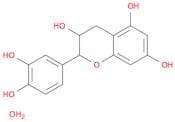
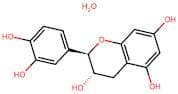
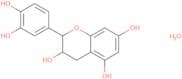
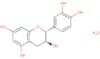
(+)-Catechin hydrate, with the CAS number 88191-48-4, is a naturally occurring flavonoid found predominantly in various plants, particularly in tea leaves, cocoa, and certain fruits. It is a type of catechin, which is a subclass of flavonoids known for their antioxidant properties. This compound is characterized by its ability to scavenge free radicals, thereby contributing to its potential health benefits, including anti-inflammatory and cardioprotective effects. (+)-Catechin hydrate is typically a white to off-white crystalline powder that is soluble in water and alcohol, making it versatile for various applications in food, pharmaceuticals, and cosmetics. Its molecular structure includes multiple hydroxyl groups, which enhance its reactivity and interaction with biological systems. Additionally, it exhibits a range of biological activities, including antimicrobial and anti-cancer properties, making it a subject of interest in nutritional and medicinal research. Overall, (+)-Catechin hydrate is valued for its health-promoting attributes and its role in the prevention of chronic diseases.
Formula:C15H14O6·H2O
InChI:InChI=1S/C15H14O6.H2O/c16-8-4-11(18)9-6-13(20)15(21-14(9)5-8)7-1-2-10(17)12(19)3-7;/h1-5,13,15-20H,6H2;1H2/t13-,15+;/m0./s1
InChI key:InChIKey=OFUMQWOJBVNKLR-NQQJLSKUSA-N
SMILES:O[C@@H]1[C@H](OC=2C(C1)=C(O)C=C(O)C2)C3=CC(O)=C(O)C=C3.O
Synonyms:- 2H-1-Benzopyran-3,5,7-triol, 2-(3,4-dihydroxyphenyl)-3,4-dihydro-, monohydrate, (2R,3S)-
- 2H-1-Benzopyran-3,5,7-triol, 2-(3,4-dihydroxyphenyl)-3,4-dihydro-, hydrate (1:1), (2R,3S)-
- (+)-Catechin monohydrate
- (+)-Catechin hydrate
- 2H-1-Benzopyran-3,5,7-triol, 2-(3,4-dihydroxyphenyl)-3,4-dihydro-, monohydrate, (2R-trans)-
Sort by
Purity (%)
0
100
|
0
|
50
|
90
|
95
|
100
Found 4 products.
(2R,3S)-2-(3,4-Dihydroxyphenyl)chromane-3,5,7-triol hydrate
CAS:(2R,3S)-2-(3,4-Dihydroxyphenyl)chromane-3,5,7-triol hydratePurity:98%Molecular weight:308.29g/molCatechin hydrate
CAS:Catechin hydrate is a naturally occurring flavonoid, which is primarily derived from sources such as tea leaves, cocoa, and a variety of fruits. As a compound, catechin plays a significant role in the plant's defense mechanisms and contributes to the taste and color of many plant-derived products. Its mode of action involves acting as a potent antioxidant, scavenging free radicals and thereby reducing oxidative stress at the cellular level. This antioxidative capacity is primarily attributed to its capacity to donate hydrogen atoms or electrons, stabilizing reactive oxygen species.
Formula:C15H16O7Purity:Min. 95%Molecular weight:308.28 g/mol