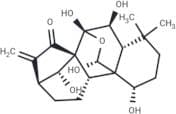
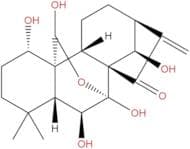
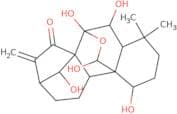
CAS 887333-30-4
:Hebeirubescensin H
Description:
Hebeirubescensin H is a chemical compound that belongs to a class of natural products known as flavonoids, which are widely recognized for their diverse biological activities. This compound is characterized by its complex molecular structure, which typically includes multiple aromatic rings and hydroxyl groups that contribute to its reactivity and potential health benefits. Hebeirubescensin H has been studied for its antioxidant properties, which may help in mitigating oxidative stress in biological systems. Additionally, compounds in this class often exhibit anti-inflammatory, antimicrobial, and anticancer activities, making them of interest in pharmaceutical research. The specific interactions and mechanisms of action of Hebeirubescensin H, however, require further investigation to fully understand its potential applications in medicine and health. As with many natural products, the extraction and purification processes can influence the yield and activity of the compound, highlighting the importance of careful methodological approaches in research and development.
Formula:C20H28O7
Synonyms:- Hebeirubescensin H
- (1alpha,6beta,7alpha,14R,20R)-7,20-Epoxy-1,6,7,14,20-pentahydroxykaur-16-en-15-one
- Kaur-16-en-15-one, 7,20-epoxy-1,6,7,14,20-pentahydroxy-, (1α,6β,7α,14R,20R)-
Sort by
Purity (%)
0
100
|
0
|
50
|
90
|
95
|
100
Found 3 products.
Hebeirubescensin H
CAS:Hebeirubescensin H is a natural product from Isodon parvifolius.Formula:C20H28O7Purity:98%Color and Shape:SolidMolecular weight:380.437Hebeirubescensin H
CAS:Hebeirubescensin H is a natural compound, specifically a triterpenoid saponin. It is derived from the herbaceous plant Ardisia gigantifolia, known for its medicinal properties. The compound exerts its effects predominantly through modulation of cellular pathways, including the induction of apoptosis and inhibition of proliferation in cancer cells. These actions are often mediated by the disruption of mitochondrial function and the activation of caspases, which are crucial for programmed cell death.Formula:C20H28O7Purity:Min. 95%Molecular weight:380.4 g/mol