CAS 88798-74-7
:Eckol
Description:
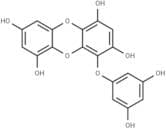
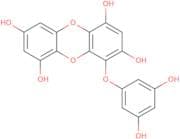
Eckol is a naturally occurring polyphenolic compound primarily derived from various species of brown algae, particularly those in the genus Ecklonia. It is known for its antioxidant properties, which are attributed to its ability to scavenge free radicals and inhibit oxidative stress. Eckol exhibits a range of biological activities, including anti-inflammatory, anti-cancer, and neuroprotective effects, making it a subject of interest in pharmacological research. The compound's structure features multiple hydroxyl groups, contributing to its solubility in water and enhancing its reactivity. Additionally, Eckol has been studied for its potential applications in food preservation and as a dietary supplement due to its health-promoting properties. Its safety profile is generally favorable, but further studies are necessary to fully understand its mechanisms of action and potential therapeutic uses. Overall, Eckol represents a promising natural product with significant implications for health and wellness.
Formula:C18H12O9
InChI:InChI=1S/C18H12O9/c19-7-1-8(20)3-10(2-7)25-16-12(23)6-13(24)17-18(16)27-15-11(22)4-9(21)5-14(15)26-17/h1-6,19-24H
InChI key:InChIKey=PCZZRBGISTUIOA-UHFFFAOYSA-N
SMILES:O(C1=C2C(OC=3C(O2)=C(O)C=C(O)C3)=C(O)C=C1O)C4=CC(O)=CC(O)=C4
Synonyms:- 4-(3,5-Dihydroxyphenoxy)dibenzo[b,e][1,4]dioxin-1,3,6,8-tetrol
- 4-(3,5-Dihydroxyphenoxy)dibenzo[b,e][1,4]dioxine-1,3,6,8-tetraol
- Dibenzo[B,E][1,4]Dioxin-1,3,6,8-Tetrol, 4-(3,5-Dihydroxyphenoxy)-
- Eckol
Sort by
Purity (%)
0
100
|
0
|
50
|
90
|
95
|
100
Found 2 products.
Eckol
CAS:Eckol inhibits ultraviolet B-induced cell damage by a decrease in oxidative stress in human keratinocytes.Formula:C18H12O9Purity:98%Color and Shape:SolidMolecular weight:372.28Eckol
CAS:Eckol is a naturally occurring phlorotannin, which is a type of polyphenolic compound, sourced from marine brown algae such as Ecklonia species. It is characterized by its unique structural properties, consisting of multiple phenolic rings that contribute to its biological activity. The mechanism of action of eckol lies in its ability to donate electrons and scavenge free radicals, thus functioning as a potent antioxidant. Additionally, it may interact with cellular signaling pathways, affecting inflammation and oxidative stress responses.Formula:C18H12O9Purity:Min. 95 Area-%Color and Shape:PowderMolecular weight:372.28 g/mol