CAS 893724-10-2
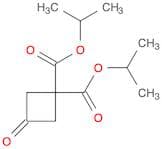
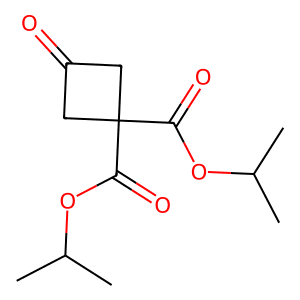
:1,1-bis(propan-2-yl) 3-oxocyclobutane-1,1-dicarboxylate
Description:
1,1-bis(propan-2-yl) 3-oxocyclobutane-1,1-dicarboxylate, with the CAS number 893724-10-2, is an organic compound characterized by its unique structure that includes a cyclobutane ring and two ester functional groups. This compound features a 3-oxocyclobutane moiety, indicating the presence of a ketone group adjacent to the cyclobutane ring, which contributes to its reactivity and potential applications in organic synthesis. The presence of two propan-2-yl (isopropyl) groups enhances its steric bulk and may influence its solubility and interaction with other molecules. Typically, compounds of this nature may exhibit interesting properties such as moderate to high boiling points, depending on their molecular weight and structure. They may also participate in various chemical reactions, including esterification and nucleophilic substitutions, making them valuable intermediates in the synthesis of more complex organic molecules. Additionally, the compound's stability and reactivity can be influenced by the electronic effects of the substituents on the cyclobutane ring.
Sort by
Purity (%)
0
100
|
0
|
50
|
90
|
95
|
100
Found 4 products.
3-Oxo-cyclobutane-1,1-dicarboxylic acid diisopropyl ester
CAS:Formula:C12H18O5Purity:97%Color and Shape:SolidMolecular weight:242.26833-Oxo-cyclobutane-1,1-dicarboxylic acid diisopropyl ester
CAS:3-Oxo-cyclobutane-1,1-dicarboxylic acid diisopropyl ester
Color and Shape:SolidMolecular weight:242.27g/molDiisopropyl 3-oxocyclobutane-1,1-dicarboxylate
CAS:Formula:C12H18O5Purity:97%Color and Shape:LiquidMolecular weight:242.271Diisopropyl 3-oxocyclobutane-1,1-dicarboxylate
CAS:Diisopropyl 3-oxocyclobutane-1,1-dicarboxylate is an organic compound with the formula (CH3CO)2C(O)OC(CH3)2. It is a cyclic ester derived from the reaction of an alcohol with a carboxylic acid. This compound is used as a reagent for generating other compounds, such as phenols and amines. Diisopropyl 3-oxocyclobutane-1,1-dicarboxylate has two diastereomers that differ in their stereochemistry at the third carbon atom. The fluorine atom on this carbon atom can be oriented in either of two positions relative to the carboxylic acid group and these are referred to as "R" or "S" configurations.Formula:C12H18O5Purity:Min. 95%Molecular weight:242.27 g/mol