CAS 89895-19-2
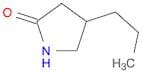
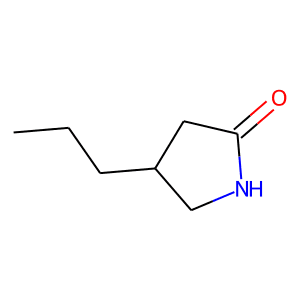
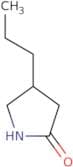
:4-Propylpyrrolidin-2-one
Description:
4-Propylpyrrolidin-2-one, also known as N-propyl-2-pyrrolidinone, is a cyclic amide characterized by its five-membered ring structure containing a nitrogen atom. It features a propyl group attached to the nitrogen, which influences its physical and chemical properties. This compound is typically a colorless to pale yellow liquid with a mild odor. It is soluble in water and various organic solvents, making it versatile for different applications. The presence of the carbonyl group in the pyrrolidinone structure contributes to its reactivity, allowing it to participate in various chemical reactions, including nucleophilic additions. 4-Propylpyrrolidin-2-one is often used as a solvent, in chemical synthesis, and in the production of pharmaceuticals and agrochemicals. Safety data indicates that it should be handled with care, as it may cause irritation upon contact with skin or eyes. Proper storage conditions are essential to maintain its stability and prevent degradation. Overall, this compound is significant in both industrial and research settings due to its unique properties and functional versatility.
Sort by
Purity (%)
0
100
|
0
|
50
|
90
|
95
|
100
Found 4 products.
4-Propylpyrrolidin-2-One
CAS:Formula:C7H13NOPurity:98%Color and Shape:LiquidMolecular weight:127.18424-Propylpyrrolidin-2-one
CAS:4-Propylpyrrolidin-2-one is a chemical compound. It is the product of the condensation of two molecules of butyric acid and one molecule of hexanoic acid. The cyclization reaction occurs at the 4 position, forming a six-membered ring. This reaction can be catalyzed by bromine or UV light. Brivaracetam is a drug that belongs to the class of antiepileptic drugs and was developed as an analog of levetiracetam, which inhibits voltage-gated sodium channels in neurons. It has been shown to have only weak affinity for benzodiazepine binding sites and does not cause sedation or memory impairment.
Formula:C7H13NOPurity:Min. 95%Color and Shape:PowderMolecular weight:127.18 g/mol