CAS 90-80-2
:δ-Gluconolactone
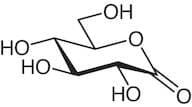
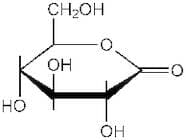
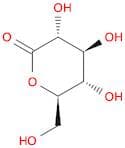
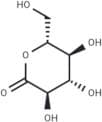
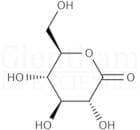
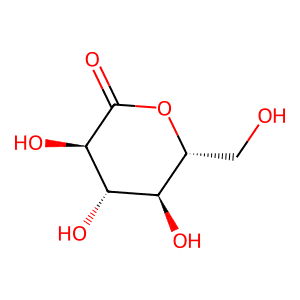
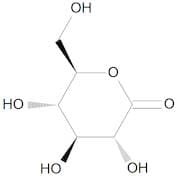
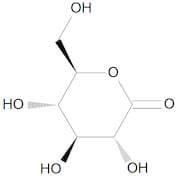
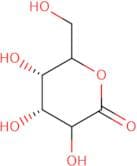
- (3R,4S,5S,6R)-3,4,5-Trihydroxy-6-(hydroxymethyl)oxan-2-one
- (3R,4S,5S,6R)-3,4,5-Trihydroxy-6-(hydroxymethyl)tetrahydro-2H-pyran-2-one
- (3R,4S,5S,6R)-3,4,5-trihydroxy-6-(hydroxymethyl)tetrahydro-2H-pyran-2-one (non-preferred name)
- (3S,4R,5R,6S)-3,4,5-trihydroxy-6-(hydroxymethyl)tetrahydro-2H-pyran-2-one (non-preferred name)
- 1,5-<span class="text-smallcaps">D</span>-Gluconolactone
- 1,5-Gluconolactone
- 3,4,5-trihydroxy-6-(hydroxymethyl)tetrahydro-2H-pyran-2-one (non-preferred name)
- <span class="text-smallcaps">D</span>-(+)-Gluconic acid δ-lactone
- <span class="text-smallcaps">D</span>-(+)-Glucono-1,5-lactone
- <span class="text-smallcaps">D</span>-(+)-Glucono-δ-lactone
- <span class="text-smallcaps">D</span>-(+)-Glucose δ-lactone
- <span class="text-smallcaps">D</span>-Gluconic acid 1,5-lactone
- <span class="text-smallcaps">D</span>-Gluconic acid lactone
- D-(+)-Gluconic acid δ-lactone
- D-(+)-Glucono-1,5-lactone
- D-Aldonolactone
- D-Gluconic acid 1,5-lactone
- D-Gluconic acid lactone
- D-Gluconic acid, delta-lactone
- D-Glucono-1,5-lacton
- D-Glucono-delta-lactone
- D-Glucono-δ-lactone
- D-glucono-1,5-lactona
- D-threo-Aldono-1,5-lactone
- E 575
- Fujiglucon
- Glucolactone
- Gluconic acid lactone
- Gluconic acid, lactone, <span class="text-smallcaps">D</span>-
- Gluconic acid, lactone, D-
- Gluconic acid, δ-lactone, <span class="text-smallcaps">D</span>-
- Gluconic acid, δ-lactone, D-
- Gluconic lactone
- Glucono delta-lactone
- Glucono-1,5-Lactone, D-
- Glucono-δ-lactone
- Gluconodeltalactone
- Gluconolactone
- Lysactone
- Riken Lactone
- delta-Gluconolactone
- delta-Gluconolactone, coarse powder
- Δ-D-Gluconolacton
- See more synonyms
D-(+)-Glucono-1,5-lactone
CAS:Formula:C6H10O6Purity:>98.0%(T)Color and Shape:White to Almost white powder to crystalMolecular weight:178.14D-(+)-Glucono-1,5-lactone, 99%
CAS:This Thermo Scientific Chemicals brand product was originally part of the Alfa Aesar product portfolio. Some documentation and label information may refer to the legacy brand. The original Alfa Aesar product / item code or SKU reference has not changed as a part of the brand transition to Thermo SciFormula:C6H10O6Purity:99%Color and Shape:Powder or crystals or crystalline powder, WhiteMolecular weight:178.14Gluconolactone
CAS:Lactones, nesoiFormula:C6H10O6Color and Shape:White PowderMolecular weight:178.04774(3R,4S,5S,6R)-3,4,5-Trihydroxy-6-(hydroxymethyl)tetrahydro-2H-pyran-2-one
CAS:Formula:C6H10O6Purity:98%Color and Shape:SolidMolecular weight:178.1400D-(+)-Glucono-1,5-lactone
CAS:D-(+)-Glucono-1,5-lactone (Gluconolactone) is a naturally-occurring food additive used as a sequestrant, an acidifier or a curing, pickling, or leavening agent.
Formula:C6H10O6Purity:99.18% - 99.64%Color and Shape:White Crystals Solid PowderMolecular weight:178.14D-Glucono-1,5-lactone
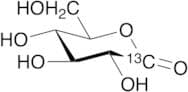
CAS:Formula:C6H10O6Purity:99.0 - 100.5 %Color and Shape:White to off-white crystalline powderMolecular weight:178.14D-Glucono-1,5-lactone-1-13C
CAS:Controlled ProductApplications Isotope labelled D-glucono-1,5-lactone is the lactone derivative of D-gluconic acid. D-glucono-1,5-lactone is widely used as a food additive to achieve a curing, pickling or leavening effect.
References Hidalgo, M.E., et al.: Int. J. Dairy. Technol., 65, 342 (2012); Li, F., et al.: Food. Hydrocolloids., 29, 347 (2012);Formula:C513CH10O6Color and Shape:NeatMolecular weight:179.13D-Glucono-1,5-lactone
CAS:Controlled ProductApplications A lactone (cyclic ester) of D-gluconic acid used as a used as a sequestrant, an acidifier, or a curing, pickling, or leavening agent.
References Jacob, M. et al.: Food Hydrocoll., 25, 928 (2011); Li, J. et al.: J. Sci. Food Agric., 91, 38, 2011;Formula:C6H10O6Color and Shape:NeatMolecular weight:178.14D-Glucono-1,5-lactone
CAS:D-Glucono-1,5-lactone is a chemical compound that is a member of the class of compounds known as diketones. It can be used in chemical biology and polymer chemistry to probe hydrogen bonding interactions, polymer compositions, and redox potentials. D-Glucono-1,5-lactone has been shown to inhibit the growth of cells in culture by inhibiting DNA synthesis. This inhibition is due to its ability to bind with high affinity to nucleic acids and prevent the formation of the enzyme complexes required for transcription and replication. The effects are reversible.
Formula:C6H10O6Purity:Min. 95%Color and Shape:PowderMolecular weight:178.14 g/molD-Glucono-1,5-Lactone extrapure, 99%
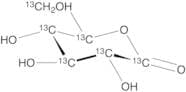
CAS:Formula:C6H10O6Purity:min.99%Color and Shape:White, Crystalline PowderMolecular weight:178.14D-Glucono-1,5-lactone-13C6
CAS:Controlled ProductApplications Isotope labelled D-glucono-1,5-lactone is the lactone derivative of D-gluconic acid. D-glucono-1,5-lactone is widely used as a food additive to achieve a curing, pickling or leavening effect.
References Hidalgo, M.E., et al.: Int. J. Dairy. Technol., 65, 342 (2012); Li, F., et al.: Food. Hydrocolloids., 29, 347 (2012);Formula:C6H10O6Color and Shape:NeatMolecular weight:184.09