CAS 9002-18-0
:Agar
Description:
Agar, with the CAS number 9002-18-0, is a gelatinous substance derived from red algae, primarily from the genera Gelidium and Gracilaria. It is composed mainly of agarose and agaropectin, polysaccharides that form a gel when dissolved in boiling water and subsequently cooled. Agar is widely used in microbiology as a solidifying agent for culture media, allowing for the growth of various microorganisms. Its gelling properties are also utilized in food products, where it serves as a thickener, stabilizer, and emulsifier. Agar is odorless, tasteless, and has a high melting point, making it suitable for applications requiring heat stability. Additionally, it is non-toxic and vegan, making it a popular alternative to gelatin. Agar's ability to form gels at low concentrations and its unique texture make it valuable in both culinary and scientific fields. Its versatility extends to the pharmaceutical industry, where it is used in drug formulation and as a medium for controlled release of active ingredients.
Formula:Unspecified
Synonyms:- Agar-Agar
- Agargel
- Azazoon
- Bacto-agar
- Cs-16A
- Gelose
- Kantenmatsu
- Karikorikan
- Max
- Phytagar
- SDA
- Ultra-Agar
- Bengal isinglass
- Agar
- Bengal gelatin
- See more synonyms
Sort by
Purity (%)
0
100
|
0
|
50
|
90
|
95
|
100
Found 18 products.
Agar powder
CAS:Agar is the most suited solidifying agent for scientific applications that require incubation temperatures closer to human body temperature. Agar is used as a medium in bacteriology and plant biology, impression material in dentistry, biofertilizer in organic farming, and salt bridges in electrochemFormula:C14H24O9Color and Shape:White to cream or pale yellow to pale brown, PowderMolecular weight:336.34Agar, low gel strength
CAS:Formula:(C12H18O9)nColor and Shape:Off-white to cream or light-brown powderMolecular weight:-Agar, low gel strength, suitable for microbiology
CAS:Formula:(C12H18O9)nColor and Shape:Off-white to cream or light-brown powderMolecular weight:-Agar, high gel strength
CAS:Formula:(C12H18O9)nColor and Shape:Off-white to cream, yellowish or light-brown powderMolecular weight:-Agar, high gel strength, suitable for microbiology
CAS:Formula:(C12H18O9)nColor and Shape:Off-white to cream or light-brown powderAgar
CAS:Agar has a wide range of applications in life science related research.Formula:C14H24O9Color and Shape:SolidMolecular weight:336.337Agar Powder
CAS:Formula:C14H24O9Purity:BRColor and Shape:Solid, No data available.Molecular weight:336.337Agar powder Bacto grade
CAS:Color and Shape:White to off-white, Powder, Clear, Colourless to pale yellowAgar powder for tissue culture
CAS:Formula:(C12H28O9)nColor and Shape:White to pale yellow, Powder, Almost clear, Pale yellowAgar powder regular grade for bacteriology
CAS:Color and Shape:Off - white to pale yellow, Powder, Almost clear to slight hazyAgar powder BactoBio for microbiology
CAS:Color and Shape:Off white to light beige, Granular, free flowing powder, Clear to very slightly turbid, Colourless to pale yellowAgar
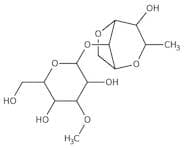
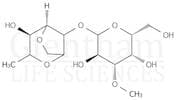
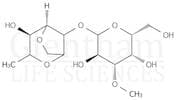
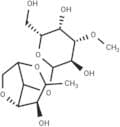
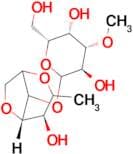
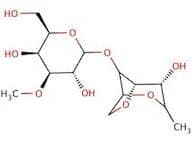
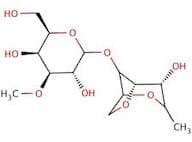
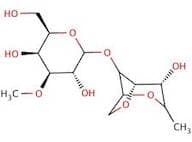
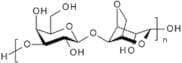
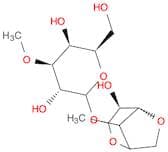
CAS:The major gel forming component in agar, agarose, consists of a linear chain of sequences of 1,3 linked β-D-galactopyranosyl units and 1,4 linkages to 3,6-anhydro-α-L-galactopyranosyl units. Gelation is done via the formation of double helices (Arnott, 1974). Agar's properties are similar to gelatin as it is primarily used as a plating gel for microbial cultures (Lahaye, 1991). However, agar is a good substitute for animal-based gelatin in vegetarian foods and is easy to use in food gels in a similar way to the carrageenans. Common food applications of agar include: puddings, custards, and soft candies. Agar improves the texture of processed cheese and frozen desserts, and is also added to baked goods to inhibit staling. A creative food application uses agar-based gel cubes that are infused with fruit extract or wine to make a vegetable-based aspic (Armisén, 2009). Agar contains two polysaccharides Agarobiose and Agaropectin. Both Gelidium latifolium and Gelidium amansii are sources of both Agar and Agarose. The images were kindly provided by Prof Mike Guiry from Cork who runs ‘The Seaweed Site’. Agaropectin Agaropectin is a sulphated non-gelling galactan comprising about 30% of Agar. Half ester sulphate is present in varying amounts plus D-glucuronic acid and small amounts of pyruvic acid. As with Agarose the main chain has alternating residues of D-galactose and L-galactose heavily modified with acidic side-groups which are usually sulfate, glucuronate, and pyruvate. Pyruvic acid is possibly attached in an acetal form to the D-galactose residues of the agarobiose skeleton. No formal structure of Agaropectin appears to have been published. Agarose Agarose is a linear gelling polysaccharide of (1-3) linked β-D-galactopyranose residues linked to 3,6-anhydro-α-L-galactopyranose via 1-4 bonds. Agar contains about 60% Agarose.Purity:Min. 95%Color and Shape:Powder